
News
Australia showcases diverse governance in globally significant protected areas update
News | Mar 2026
New designations reported by Australia to the World Database on Protected and Conserved Areas mean the world is within touching distance of protecting 10 per cent of the ocean
Australia has made globally important progress in protecting its land and sea. In recent years, the megadiverse country has ramped up how much of its territory is being conserved for nature.
In many instances, these protected and conserved areas support equitable governance and the participation of First Nations peoples.
Since June 2022, Australia and its overseas territories have:
- Reported 167 new areas, including 11 Indigenous Protected Areas (IPAs), and 2 IPA expansions
- Expanded a marine reserve with an additional protected area bigger than the size of Italy
- Recognized the country’s first Conserved Area through the National Other Effective Area-Based Conservation Measures (OECMs) Framework
The new areas were included in the latest update this month to the World Database on Protected and Conserved Areas (WDPCA). The WDPCA is where governments monitor and report their progress towards international environmental agreements, such as Target 3 of the Kunming-Montreal Global Biodiversity Framework (KMGBF) to protect and conserve 30 per cent of the Earth by 2030. The WDPCA, which was recently upgraded, is maintained by the UN Environment Programme World Conservation Monitoring Centre (UNEP-WCMC).
Protected and conserved areas are much more than legally designated, government-run parks. Furthermore, achieving the world’s pledges to protect and conserve biodiversity is only possible by recognising the work and rights of people who are already conserving huge areas of the world.
Australia’s update to the WDPCA showcases a genuinely diverse network of protected and conserved areas. Here, we identify three different types of land governance across the new reported areas and OECM: Indigenous Peoples, state government and private not-for-profit.
Governance by Indigenous Peoples
The way we think about protected and conserved areas has changed. The most effective reserves are not always strict protected areas that limit human access; rather, Target 3 of the KMGBF highlights that action on protected and conserved areas should not only respect the rights of Indigenous Peoples and local communities (IP & LCs), but also recognizes that IP & LCs have a crucial role to play in biodiversity conservation.
Many sites managed by IP & LCs meet the definition of protected areas or OECMs but have not been recognized by governments or gone through a formal process of recognition. In other cases, IPs & LCs might prefer not to use these terms to describe their lands and waters, but nevertheless play an important role in safeguarding biodiversity. The benefits to the world of understanding what areas are already conserved by IP & LCs are huge, and countries need clear national strategies to promote IP & LC recognition, guided by the preferences of IPs & LCs.
Australia’s update to the WDPCA this March contains important steps to give Indigenous People greater control over their ancestral lands. Of the 167 new protected sites, 12 are Indigenous Protected Areas (IPAs) – areas of land and sea that are managed by First Nations people in accordance with Traditional Owners’ objectives. There are currently 95 IPAs. Some of the largest cover vast areas of unique desert ecosystems and include the Central Western Desert and Ngurra Kayanta.
State governance: Heard Island and McDonald Islands Marine Reserve
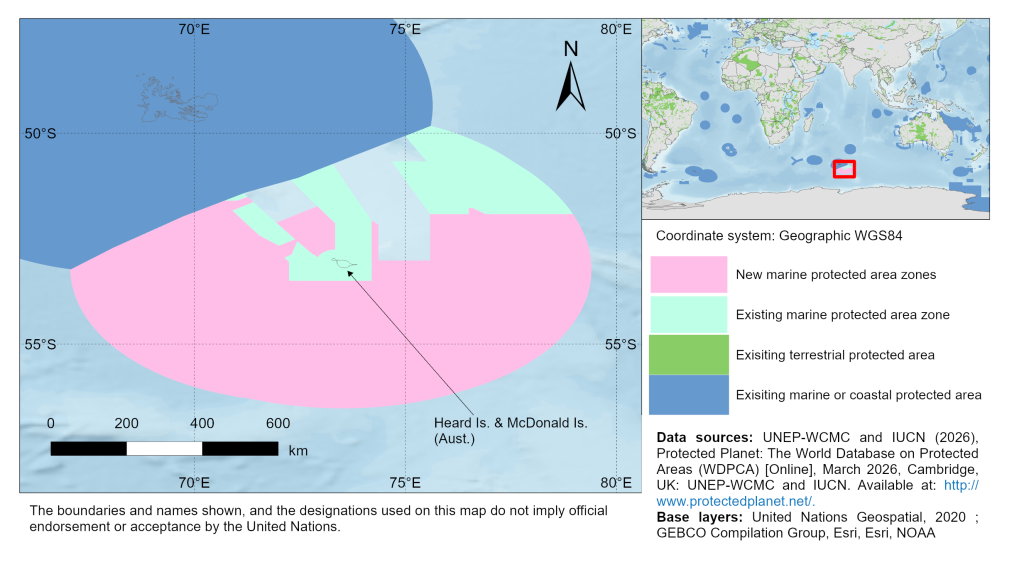
Last year an existing marine reserve in the sub-Antarctic islands of Heard Island and McDonald Islands was expanded by 400 per cent, creating a protected area nearly the size of Norway.
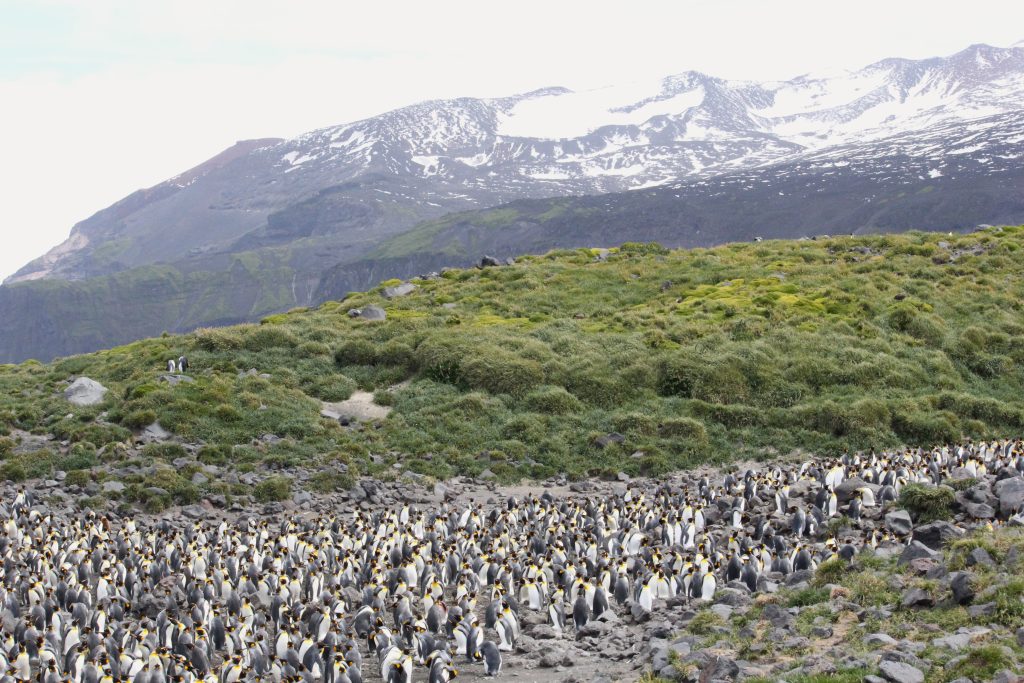
One of the most remote places on Earth, the islands in the Southern Ocean are a World Heritage Area. They provide a crucial breeding and feeding ground for hundreds of thousands of seals and birds, including penguins, albatrosses and petrels. In addition, whales, dolphins and sea lions are regular visitors to the Islands.
Designating a large area of ocean around the islands as protected means that significant industrial or extractive activity is not permitted. Fisheries must be well-regulated and sustainable. This will help fish populations, in turn meaning more food for birds, seals and other marine animals. Shoring up nature will also ultimately contribute to lessening the impact of climate change, as healthier ecosystems are more able to store carbon and mitigate extreme weather.
Notably, the expansion of Heard Island and McDonald Islands Marine Reserve brings the world within touching distance of an important milestone: protecting 10 per cent of the ocean, with 9.97 per cent now covered.
Private non-profit governance: Weranga Scarps
A third type of land governance embodies the principle that private actors have a role to play as custodians of nature.
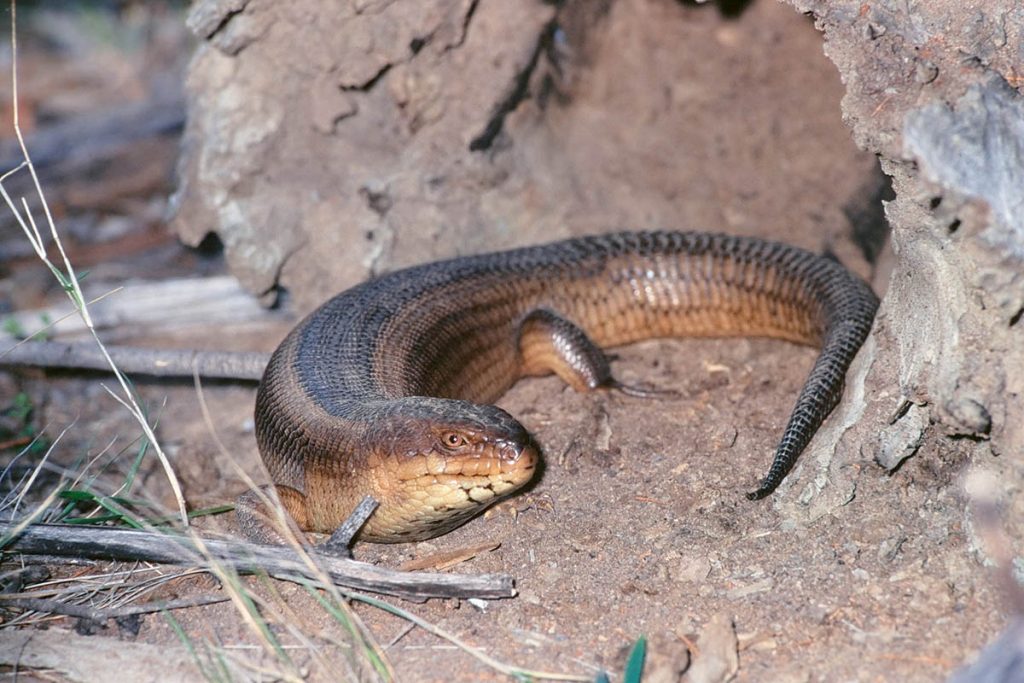
Weranga Scarps is a private property in the northeast state of Queensland. Covering 48 hectares of eucalyptus and cypress woodland, it is rich in iconic threatened species, such as the koala, glossy black-cockatoo and golden-tailed gecko. The site is governed by the Wildlife Land Fund, a not-for-profit organisation that acquires and manages land for wildlife.
Weranga Scarps was recognized in July 2025 and is Australia’s first OECM listed in the WDPCA. OECMs (‘Other effective area-based conservation measures’) are sites outside of protected areas. They achieve the long-term effective conservation of biodiversity, even though they may be managed primarily for other reasons.
OECMs are a vital tool for reaching the international target to protect 30 per cent of the planet by 2030. They can include but are not limited to heritage or cultural sites, military reserves and areas conserved by Indigenous Peoples and local communities.
With just four years left to achieve Target 3, UNEP-WCMC and the Protected Planet team are proud to support countries as they continue to make strides in designating, recognising and effectively managing new protected and conserved areas.
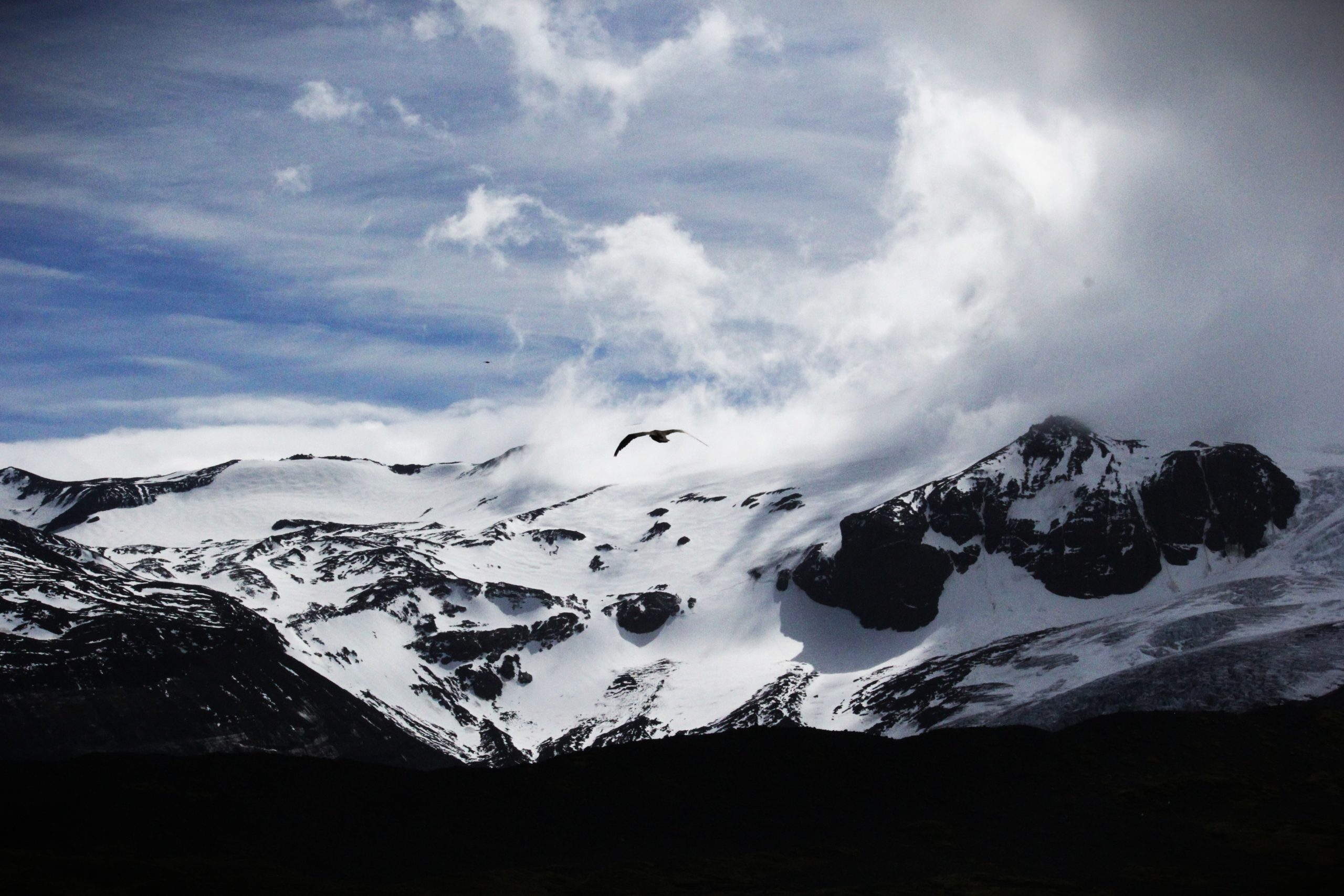
Main image: Heard Island © Mel Wells
Have a query?
Contact us
communications@unep-wcmc.org