
News
Behavioural tweaks are not enough to save nature. Here’s how we achieve transformative change
Comment | Mar 2026
Dr Thiago Uehara, Principal Specialist in UNEP-WCMC’s Nature-Based Solutions team, shares five insights from a recent series of reports that examine how to bring about a systemic approach to biodiversity policy
Much of today’s biodiversity policy is built around good intentions. It encourages better choices, greater awareness and more responsible behaviour. These efforts matter, and they have helped place biodiversity firmly on public and political agendas.
Yet there is a growing sense, across research and practice, that something remains misaligned. Even where awareness is high and commitments are strong, biodiversity loss continues.
Many environmental interventions still approach nature as a distinct sector, addressed through conservation measures, safeguards or targeted incentives. Less attention is paid to the economic and governance systems that influence what is produced, traded, financed and valued, and yet it is in these systems that the drivers of biodiversity’s decline can be found.
A new series of briefs by the UN Environment Programme World Conservation Monitoring Centre (UNEP-WCMC) explores what a more systemic approach to biodiversity policy could look like, drawing on insights from trade, fashion, agriculture and finance.
As we developed the briefs – part of the EU-funded PLANET4B project, which ran from 2022 to 2025 and sought to discover how to bring about better decision-making for biodiversity – a shared conclusion emerged. Behavioural change and inclusion remain essential, but progress depends on reshaping incentives, norms and institutions, and on addressing questions of power, equity and accountability. Together, the briefs identify five interconnected areas where change is already emerging.
1. Rebalance power and accountability
Deforestation, labour exploitation and ecological decline rarely occur by chance. They reflect where power sits in value chains and who carries risk. The Resilient Trade Beyond Traceability brief shows how to go beyond monitoring, emphasising due-diligence mechanisms alongside meaningful grievance and remedy processes. It outlines the need for a fairer distribution of value and risk with the EU’s major trade partners, examining the EU–Brazil partnership in particular.
It also draws attention to local food distribution systems – ‘territorial markets’ – and economies centred on livelihoods, equity and well-being, built through the sustainable use and restoration of ecosystems – ‘socio-bioeconomies’ – as ways to connect biodiversity conservation with inclusive rural development. This is how trade and cooperation policies can reinforce well-being and rights, not only constrain harm. Transformation tends to advance when responsibility travels the full length of a value chain and when accountability reaches the boardroom.
2. Redefine prosperity through well-being and sufficiency
Across the briefs, well-being and sufficiency offer a different way of defining success, shifting attention from the pace and scale of economic activity to the quality, equity and resilience of outcomes.
In practice, this means revisiting harmful subsidies, integrating equity and nature indicators into taxonomies and disclosures, and rewarding stewardship alongside productivity. It is not an accounting fix, but an emerging approach to understanding progress based on how societies, economies and nature thrive together.
3. Protect and expand seed diversity
Our Supporting Seed Diversity for Resilient EU Agriculture brief demonstrates how the role of farmers and Indigenous Peoples in saving, exchanging and developing seeds contributes to resilient food systems, cultural heritage and local autonomy.
Examples from Hungary show how community seed banks and school gardens, supported through collaborations with national gene banks, can become living classrooms linking ecological knowledge with social inclusion. These initiatives suggest that diversity of species, knowledge and livelihoods is not a byproduct of resilience; it is its foundation. The brief explores options such as proportionate seed rules, nano-enterprise exemptions and Common Agricultural Policy eco-schemes that recognise individual farms’ genetic diversity.
4. Build institutions that learn and are inclusive
A synthesis brief developed under the project brings together all the insights relevant for policy development and implementation. The brief shows how participation, reflection and collaboration can help turn engagement into agency and policy legitimacy. In Graz, Austria, a women-led garden turned a vacant plot into a shared landscape of confidence and biodiversity care. In the UK, Dadima’s intercultural countryside walks helped Black, Asian and ethnic-minority communities reclaim belonging in nature.
Such experiences suggest that facilitation and reflection are necessary for effective implementation. The brief sets out design principles that can help embed these capabilities in European and national biodiversity strategies, especially where contested trade-offs and uneven impacts can otherwise stall action.
5. Align policies and finance
The trade and finance briefs both highlight the importance of coherence across trade, finance, agriculture and industry, so that measures reinforce rather than contradict one another.
In trade, misaligned policies can send mixed signals to producers and investors. Greater alignment between EU deforestation regulations, sustainable-finance taxonomies and cooperation instruments could strengthen credibility and reduce unintended burdens on smallholders and suppliers.
Coherence is not bureaucracy; it is the architecture that enables change to hold together across sectors.
Towards a politics of care and accountability
The EU and its partners have ambitious biodiversity goals. However, fiscal, trade and innovation frameworks often still reward degradation more than conservation, restoration, or sustainable use. That paradox defines both the urgency and the opportunity of our time.
Transformative change is rarely linear or fully predictable. Progress depends on sustained learning, monitoring and the willingness to adjust course as conditions evolve. Transitions also generate uneven impacts. Some members of society face short-term costs, while others benefit earlier. Anticipating these dynamics, and ensuring that costs and benefits are shared fairly, is essential.
The PLANET4B insights provide insight for a policy agenda grounded in care, reciprocity and shared responsibility. Changing behaviour begins with changing the systems that shape it. Justice and inclusion are not secondary considerations to ensure that nature thrives; they are necessary conditions for success.
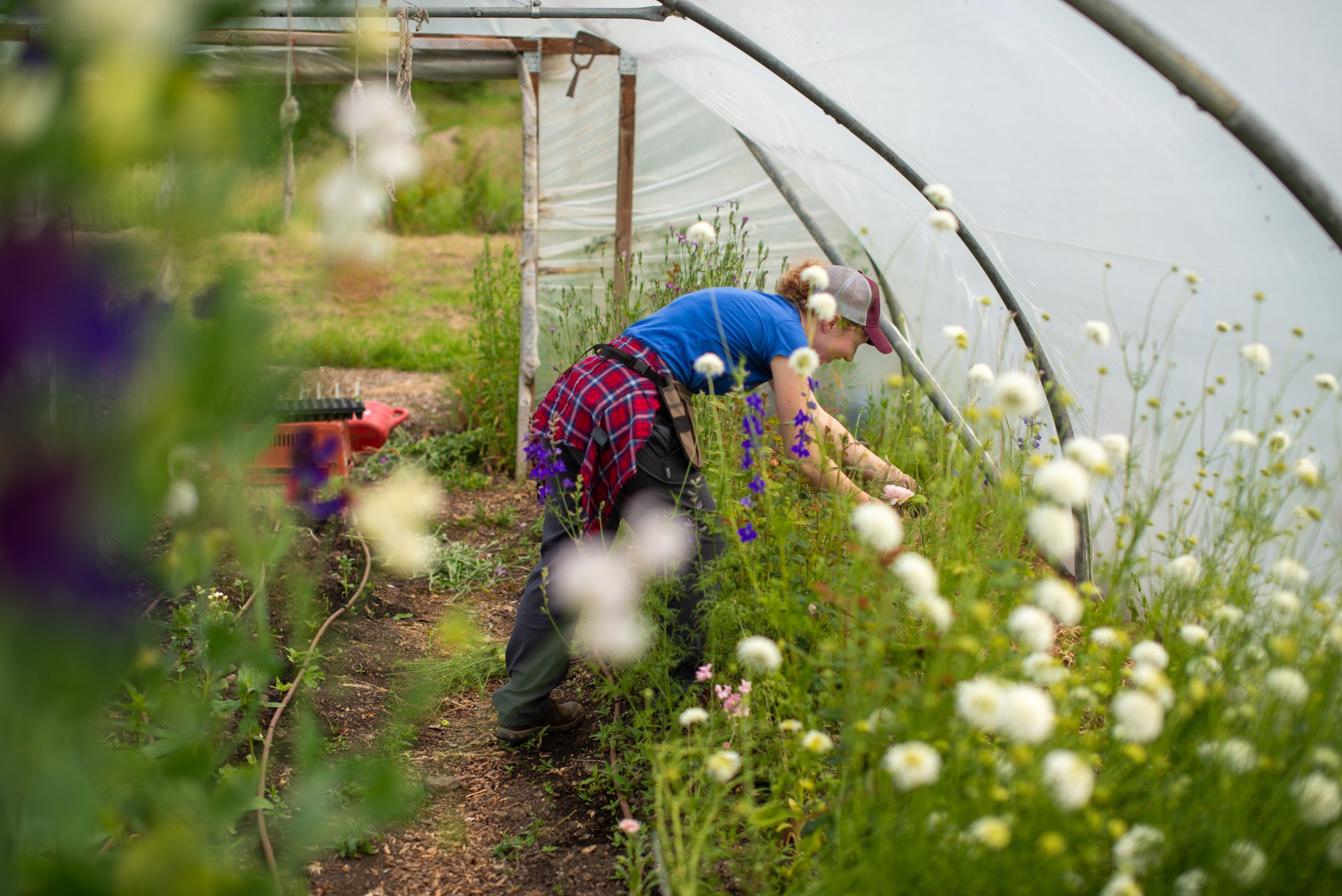
Main image: An organic farm on the outskirts of Sheffield run by a community benefit society (Main image: Alastair Johnstone via Climate Visuals / CC BY-NC-ND 4.0)
Have a query?
Contact us
communications@unep-wcmc.org