
News
Building understanding of the use of Traditional Knowledge Indicators for monitoring biodiversity
Story | Apr 2026
Expert Workshop on Traditional Knowledge Indicators considers the next steps in developing rights-based monitoring frameworks.
Indigenous Peoples are vital knowledge holders and custodians of many of the world’s most biodiverse landscapes. Respecting and advancing their rights is imperative to achieving the world’s major international commitment on biodiversity, the Kunming-Montreal Global Biodiversity Framework (KMGBF).
Indicators related to traditional knowledge (TK) help reveal how Indigenous Peoples’ rights, practices and knowledge systems contribute to biodiversity outcomes. In addition, TK indicators help illuminate national and global progress towards shared biodiversity goals, informing management responses that are relevant across society.
In March 2024, an expert workshop hosted at the UN Environment Programme World Conservation Monitoring Centre (UNEP-WCMC) informed recommendations for using TK indicators. These indicators are now included in the monitoring framework for the KMGBF to measure progress against its targets and goals.
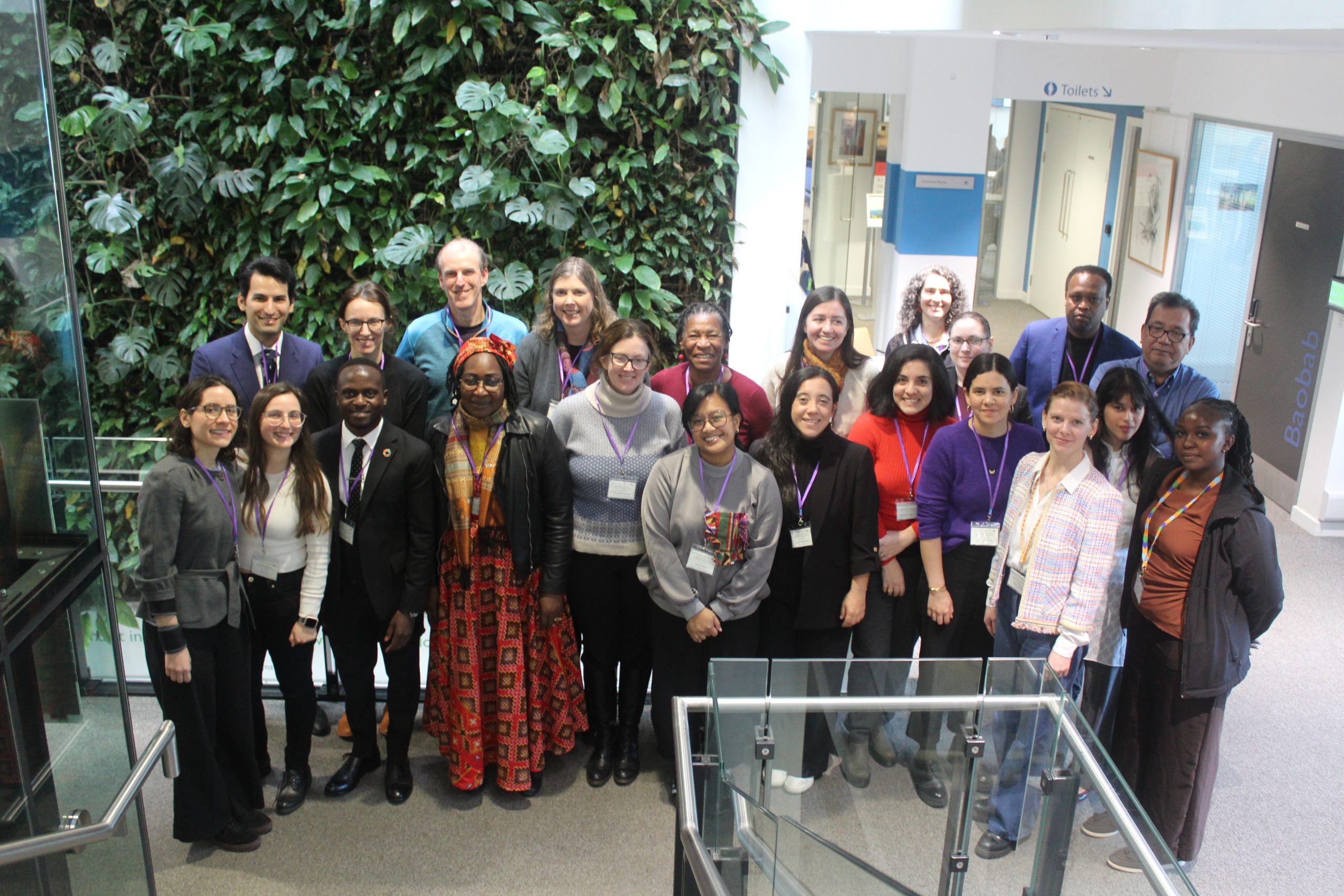
In January 2026, a second Expert Workshop on TK Indicators brought together more than 30 experts from Indigenous and local organizations to governments and technical partners. Co-hosted by UNEP-WCMC, Forest Peoples Programme and the Secretariat of the Convention on Biological Diversity, the workshop provided a space to share experiences of community-based monitoring, methodological developments for TK indicators and identify opportunities for mobilizing local and national data for biodiversity monitoring and reporting.
The workshop’s key takeaway was that rights-based monitoring, which respects Indigenous Peoples’ rights, knowledge systems and meaningful participation across society, is essential for delivering the KMGBF in line with its vision of living in harmony with nature.
Monitoring traditional knowledge is vital for inclusive conservation
“We monitor what we value, and we value what we monitor”
Josefa Tauli, Global Youth Biodiversity Network and of the Indigenous Ibaloi-Kankanaey Igorot.
Indigenous Peoples’ rights, practices and knowledge systems contribute to positive biodiversity outcomes. Indicators related to TK are vital in ensuring these contributions are understood and accounted for. They enable countries and stakeholders to track progress and ensure that national biodiversity policies reflect a whole-of-society approach to nature conservation.
Participants emphasized that monitoring is not only about what data is collected, but how that data is collected, and whose knowledge is valued. Data related to TK indicators were also identified as an important tool for Indigenous self-determination and for strengthening evidence and advocacy for Indigenous Peoples land and territorial rights.
The importance of community-based monitoring and information systems (CBMIS) for both providing data and for showing the inseparability of people and nature was emphasized in community experiences shared by participants. Insights from Colombia, Kenya, Cameroon and the Philippines highlighted experiences of youth engagement in Indigenous-led monitoring as a vital space and mechanism for intergenerational knowledge transfer between elders and youth, helping to sustain traditional knowledge systems while fostering mutual respect across generations.
Rights-based indicators are ready to use, but awareness and data flows are still limited
During the workshop, experts reported that the methodologies for the five rights-based indicators are now operational, although further guidance is still needed for some component indicators such as linguistic diversity and participation.
However, many countries still face challenges in collecting and reporting the data required to apply these indicators at a national level. Among the countries represented at the workshop, validated national data were often unavailable due to limitations in statistical systems, lack of disaggregated data and difficulties linking community-level information with national monitoring frameworks.
Despite these challenges, participants highlighted encouraging examples of how governments and Indigenous organizations are beginning to integrate community knowledge and data into national monitoring processes.
Bridging local knowledge with national monitoring and reporting
A recurring theme across the workshop was the need to create spaces and processes for community-generated knowledge to feed into national monitoring and reporting systems.
Participants emphasized a range of actions that could help to improve the use and uptake of TK indicators and community-produced data in national monitoring systems, including institutionalizing participatory mechanisms such as multi-stakeholder platforms, improving interoperability between datasets and ensuring that Indigenous and local knowledge is treated as a legitimate source of evidence for policymaking.
Insights from the workshop are being collated by UNEP-WCMC to build an understanding of how and why countries are using the TK indicators, with such country case studies potentially informing the deliberations by CBD Parties, including at COP17.
Crucially, participants emphasized that Indigenous Peoples and local communities are experts in biodiversity monitoring and countries can benefit from their expertise to fulfil their global commitments. Advances in rights-based monitoring could be accelerated with greater financial support, the institutionalization of mechanisms for broader participation, as well as practical guidance for countries on how to integrate community-generated data into national monitoring and reporting frameworks.
By continuing to build these partnerships and refine the indicators, the international community can move closer to a monitoring system that recognizes a diversity of knowledge forms and promotes the rights of Indigenous Peoples and local communities and the essential role they play in protecting the planet’s biodiversity.
Have a query?
Contact us
communications@unep-wcmc.org