
News
Corporate strategies that are taking nature into account: reflections from the Sustainable Landscapes forum
News | Nov 2025
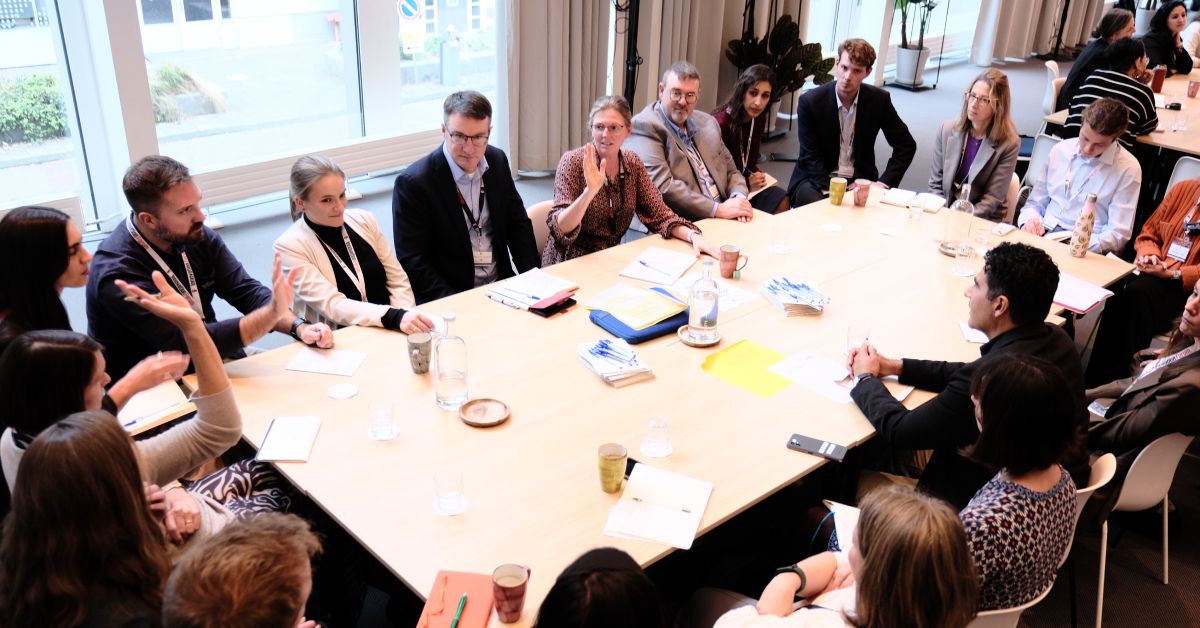
Dr Shaenandhoa García Rangel, Deputy Head of Nature Economy, spoke at the Sustainable Commodities and Landscapes Forum last month. This event brought together more than 200 supply chain and sustainability professionals to address the greatest risks and opportunities in commodity supply chains.
Nature-related risks embedded in commodity supply chains are increasingly recognised as material by sustainability professionals globally. Leading companies are now not only looking to ensure deforestation- and conversion-free operations, but also looking to build the resilience of their supply chains by understanding their nature-related dependencies. Through this, they are shining a light on the often-underappreciated cost of inaction of addressing the impacts of nature loss on their operations.
At the event, it was heartening to hear about the shift in mindset by some companies. Sustainability is increasingly viewed as a value creator rather than just a cost centre. Senior leadership buy-in was repeatedly highlighted by panellists as key. This level of commitment helps ensure the continuity of company plans to reduce nature-related risks and engage in solutions with longer-term rates of returns, such as restoration.
I was encouraged by the number of organisations working at the landscape level. These convene a wide range of stakeholders to tackle both nature and socially related issues. Collaboration at this scale makes for more effective actions and prevents leakage issues. UNEP-WCMC’s work supports the benefits of this approach — not only for protecting and restoring ecosystem function and services, but also supporting local livelihoods and wellbeing.
Many participants emphasised the role of tailored financial instruments — including risk-management insurance — as important catalysts for sustainability across supply chains. We heard from a range of financiers about how they had identified nature dependencies within agricultural supply chains as risks in their portfolios. Financing models where banks are working with both producers and supply chain companies to capitalise on opportunities, such as transitioning to regenerative agriculture, demonstrated the benefits of working collaboratively to find solutions and share risks. This aligns closely with what we hear from our public-sector counterparts worldwide. In parallel, UNEP-WCMC is working, together with partners, to build capacity across financial institutions to understand nature-related risks, monitor the impact of nature investments and identify entry-points for supporting national and sub-national level action.
A strong theme that arose from the sessions was the need for internal capacity-building on nature across company functions. It’s not just the sustainability team that needs to be up to speed — every part of the organisation has a role to play in managing nature-related impacts and risks. This resonates with our “Every Job is a Nature Job” project, an initiative supported by the Proteus Partnership. The project provides actionable recommendations for specific job roles on integrating nature into their daily activities. Embedding such notions across all business functions can truly be transformative — supporting what the Kunming‑Montreal Global Biodiversity Framework calls a “whole of society” approach.
All in all, I left the event feeling optimistic. Nature continues to be an important topic for the businesses present at the Innovation Forum, despite an increasingly challenging global landscape. In particular, multinationals discussed their pronounced ambitions for compliance with, for example, EUDR or disclosure frameworks. They consider nature-related actions as business-critical for the future. As we look towards 2026, we will continue to empower and elevate these kinds of debates, including at the upcoming Nature Action Dialogues.
About the Event
The Innovation Forum brings together the private sector, NGOs, policymakers and thought leaders to accelerate solutions for sustainable sourcing, nature-positive land use and responsible commodity production.
Have a query?
Contact us
communications@unep-wcmc.org