
News
Explainer: Why OECMs are crucial to conserving 30% of Earth’s lands and waters
Story | May 2026
Places where nature thrives outside of protected areas have huge potential to help the world achieve the global pledge to conserve 30% of Earth’s lands and waters by 2030
A sacred forest in India. A community-managed fishery in the Philippines. A military training ground in Europe. What do these places have in common?
They could all be sites where nature is thriving and is being conserved. But they are not protected areas.
These places have potential to be recognized as ‘other effective area-based conservation measures’ (OECMs): areas that are not necessarily managed primarily for conservation, but that result in effective, long-lasting benefits for nature.
OECMs are already playing an important role in meeting the global pledge to protect and conserve 30 per cent of Earth’s land and seas by 2030. These areas offer an opportunity to achieve all elements of the pledge by recognizing the conservation efforts and rights of diverse groups, including Indigenous Peoples and local communities, who often have a deep history of conserving their lands and waters.
But the concept of OECMs is still relatively new, having been formally defined in the past decade. Greater understanding, awareness and recognition of OECMs is still needed.
What are OECMs? How are they different to protected areas?
Identifying which areas qualify as OECMs is a topic of huge interest, currently being explored by people across the world, from youth groups to governments and non-governmental organizations.
Through the Convention on Biological Diversity, governments have agreed on four criteria that an area must fulfil to be an OECM:
- Not be currently recognized as a protected area.
- Be governed and managed.
- Achieve sustained and effective contribution to the conservation of biodiversity.
- Support ecosystem functions and services and respect cultural, spiritual, socio-economic and other locally relevant values.
Beyond these broad criteria there is enormous variation in OECMs, in terms of their size, geography and the biodiversity they conserve, and in terms of how they are managed and who they are governed by. For instance, they might be sacred natural sites or forests governed by Indigenous Peoples or local communities; areas of the high seas managed by intergovernmental organizations; or whole watersheds managed by local or national governments.
While protected areas are primarily managed to conserve biodiversity, OECMs are often managed for other reasons – but crucially, they must result in effective, long-lasting conservation of nature. Protected areas are often created from scratch, requiring the development of management plans and the installation of new management authorities. In contrast, OECMs will usually be areas with pre-existing management objectives and structures. They are already effective in conserving biodiversity; often all that changes is that they are recognized as ‘OECMs’, acknowledging the conservation benefits they provide.
Where are most OECMs found?
OECMs have so far been formally recognized in 17 countries and territories, with nearly 7,500 reported. Sweden, Ukraine and Canada have recognized the highest number of OECMs so far. In the ocean, beyond national jurisdiction, there are multiple large OECMs in the North Atlantic.
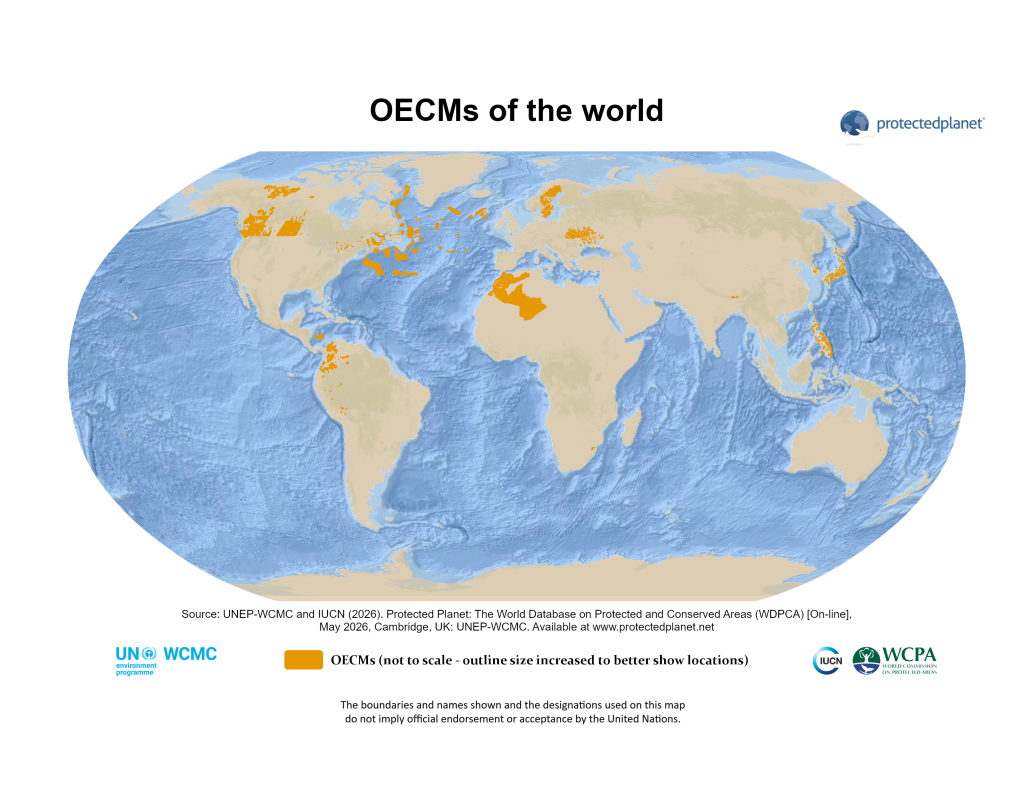
Although most countries have not yet recognized OECMs and reported on them, OECMs are likely to exist in every country. Across Europe for example a recent study found that areas suitable for OECMs could cover up to 10 per cent of land.
The important next step for governments and other stakeholders is to develop appropriate local and national processes for identifying, recognizing and supporting sites as OECMs.
How can OECMs help us halt and reverse nature loss?
OECMs are often areas in which biodiversity has been conserved effectively for a long time, but are not yet accounted for in the global protected and conserved area network. Recognizing them is therefore an important opportunity to make progress towards protecting and conserving 30 per cent of Earth’s lands and seas. At the same time, recognition can enable those sites to access resources and additional support to ensure their conservation outcomes can be sustained into the future.
While recognizing OECMs is important for halting and reversing nature loss, efforts are also needed to expand and improve existing protected areas, designate new protected areas, and to improve how effective all of these sites are. It is also critical to recognize Indigenous and traditional territories in which biodiversity thrives in many parts of the world. Governments agreed when they adopted the 30 per cent target, that all these actions on protected and conserved areas must be done while recognizing and respecting the rights of Indigenous Peoples and local communities.
What difference are OECMs making to biodiversity?
OECMs are already making important contributions to the global network of protected and conserved areas, despite having only been recognized and reported by a few countries. As of April 2026, OECMs cover 1.1 per cent of the world’s land and 0.21 per cent of sea.
OECMs are also making an impact at a country level. In Morocco and Algeria OECMs now surpass the coverage provided by protected areas. In Morocco, this additional coverage increases the amount of land that is both protected and well-connected by 30 times. In the Philippines, OECMs account for over half of the marine area within protected and conserved areas.
The data on OECMs suggests they make a substantial difference to the coverage and connectivity of conservation networks. However, their impact on biodiversity also depends on how well they are governed and managed. This cannot be understood from analyzing spatial data alone. At present, there are limited data on whether OECMs are maintaining their biodiversity values over time, but these data are gradually improving.
Can an OECM also be a protected area or marine protected area?
No. By definition, an OECM is an area outside of protected areas, including marine protected areas. OECMs can however complement protected areas, for example by increasing ecological representation and enhancing connectivity across conserved landscapes.
Do OECMs protect Key Biodiversity Areas?
Key Biodiversity Areas (KBAs) are sites that contribute significantly to the rich diversity of life on Earth. For an area to qualify as an OECM, it must conserve and support important biodiversity. There are many ways to identify whether an area has important biodiversity, and recognition of the area as a KBA is one of these. There is therefore a lot of potential for countries to identify OECMs that overlap with KBAs. Currently over 120 KBAs that aren't in protected areas are partially or fully covered by OECMs: 74 on land, 44 at sea and three freshwater KBAs. These OECMs are providing additional protection to these important biodiversity areas.
Can OECMs encourage more inclusive and diverse forms of land governance?
Yes, OECMs can be managed for a range of purposes and under diverse governance regimes. As with protected areas, OECMs can be governed by government entities at national or sub-national scales, Indigenous Peoples, local communities, private individuals and other public or private organizations. Because biodiversity conservation does not need to be a primary management objective for a site to qualify as an OECM, this opens up opportunities to recognize a greater diversity of sites that are managed for other reasons but are making important contributions to biodiversity conservation, such as archaeological sites, agricultural or hunting areas, or sacred religious sites.
OECMs under Indigenous Peoples’ and community governance are already being recognized and reported, so far in Colombia, the Cook Islands, Ecuador, Eswatini, Peru and the Philippines.
Can an ICCA be an OECM?
Territories and areas conserved by Indigenous Peoples and local communities are often called ICCAs or territories of life. ICCAs can indeed be recognized as OECMs, where Indigenous Peoples and local communities choose this form of recognition and following appropriate consent procedures. In some countries Indigenous Peoples and local communities are already engaged with identifying OECMs as a way to gain greater recognition and support for their conservation efforts. In other places, Indigenous Peoples and local communities have opted to seek recognition for their ICCAs as protected areas.
How are OECMs recognized in law? Do they have the same legal standing as protected areas?
How OECMs are recognized legally varies between countries. Some countries are developing national OECM-related laws, policies and other kinds of regulations. However, it is not a requirement for OECMs to be legally recognized. More important is that countries develop mechanisms, whether legal or otherwise, to ensure OECMs can be effectively governed and managed and their conservation outcomes sustained into the future, as complementary approaches to protected areas.
How are OECMs identified, recognized and reported?
Several tools are available to support the identification of sites as OECMs, including tools developed for specific national contexts. The International Union for Conservation of Nature (IUCN) provides a practical checklist-style framework that allows users to assess whether a site meets the criteria for being recognized as an OECM. The framework follows a three-step process of screening, obtaining consent and conducting a full assessment. Data are needed on the governance and management regime of the area, long-term expectations for the area and other site-specific information. The assessment tool can be used by anyone provided they have the consent of the people or organization that manages the potential OECM, but the process for securing formal recognition of the area as an OECM will vary depending on the policies of the relevant national or subnational government.
Once identified, OECMs can be reported to the World Database on Protected and Conserved Areas (WDPCA). The WDPCA is a joint product of UNEP and IUCN that is managed by the UN Environment Programme World Conservation Monitoring Centre (UNEP-WCMC) in collaboration with national governments and other stakeholders.
The Protected Planet team at UNEP-WCMC process data on OECMs as they are received, with new records most often submitted by governments. Each month new data are updated on the publicly available Protected Planet website, which enables tracking of global progress towards conserving 30 per cent of Earth’s lands and seas.
How can local communities get involved in recognizing an OECM?
Action by local communities in individual sites is key to achieving global progress. Raising awareness of the opportunity to identify and recognize areas as OECMs is a first step to exploring whether the land owned, governed or managed by local communities might meet the criteria.
In the Cook Islands, government and community representatives made history by recognizing the first OECM in the Pacific Islands. A national process was undertaken to introduce the OECM concept and criteria, identify potential sites, carry out site-level screening and a full assessment and obtain consent to submit an application. In 2024, the National Environment Service submitted the Takitumu Conservation Area to the WDPCA.
The recognition has created more opportunities for the three governing communities to access funding for managing the Takitumu Conservation Area, and has raised awareness throughout regional forums of the incredible conservation efforts of local communities in the Cook Islands.
If you are beginning the journey of considering areas that might be recognized as OECMs, then the OECM Platform is the best starting point. The Platform provides comprehensive guidance, including a free online introductory course to help identify, report, monitor, and strengthen OECMs.
The Protected Planet team at UNEP-WCMC is also available to provide support if you are starting to explore OECM recognition. Every site recognized helps to sustain the biodiversity of that area into the future and brings us a step closer to conserving 30 per cent of Earth’s lands and waters.
This article was funded by a generous donation from the Global Youth Council on Science, Law & Sustainability
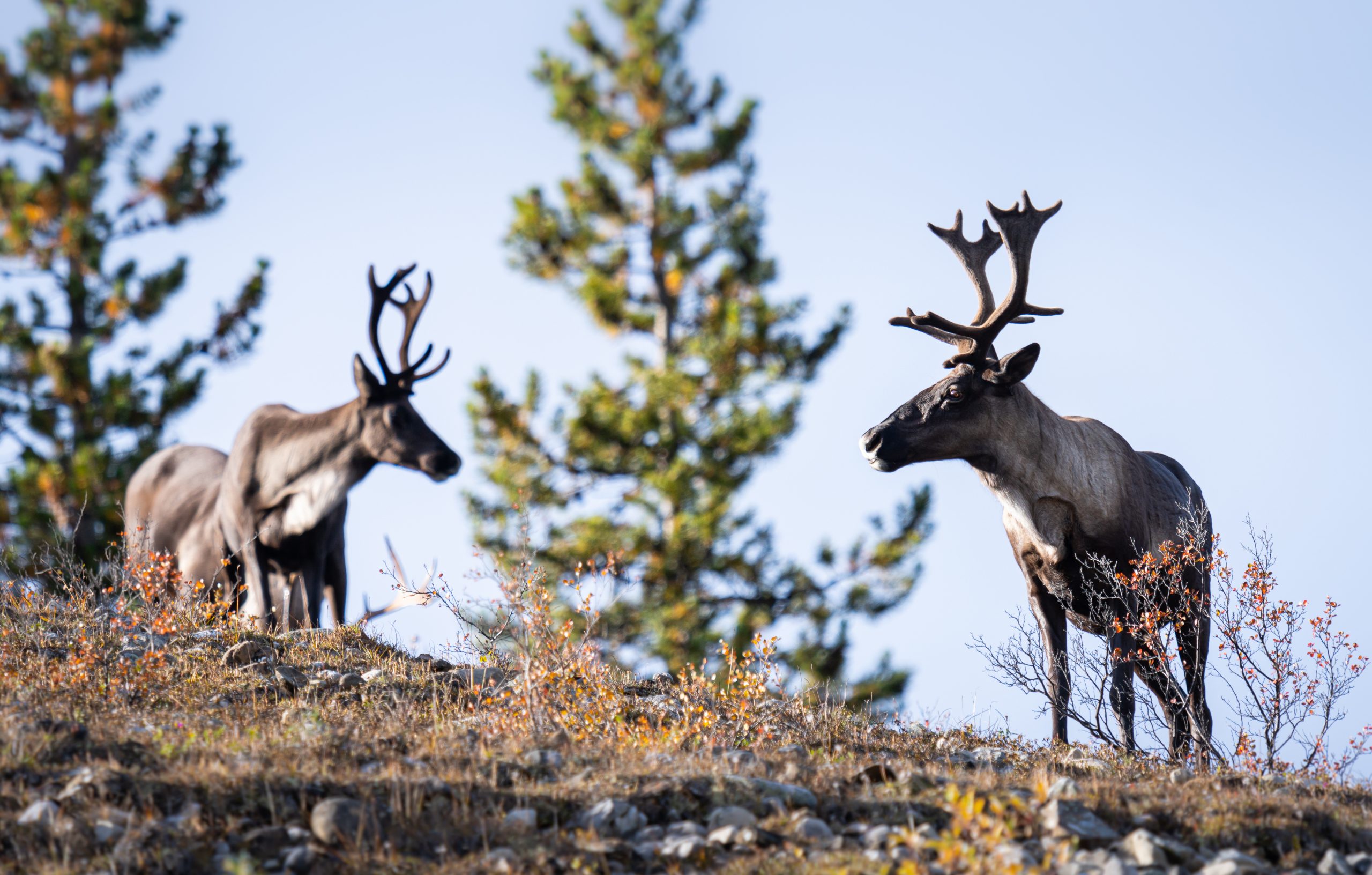
Main image: Caribou in Canada (Adobe_382649449)
Have a query?
Contact us
communications@unep-wcmc.org