
News
Exploring the potential of ’blue carbon’ in Europe
News | Nov 2025
How seascape restoration can contribute to climate change mitigation
Author: Reka Marton, Intern, Nature-based Solutions, UNEP-WCMC
Marine and coastal ecosystems are increasingly recognized as critical allies in addressing the climate crisis. While terrestrial nature-based solutions, such as the restoration of forests and peatlands, have long dominated global climate strategies, the role of ’blue carbon’ – particularly that stored and sequestered by coastal habitats– is only now beginning to get the attention it deserves. Yet despite their potential, many of these habitats remain poorly understood and undervalued, particularly within Europe.
The Endangered Landscapes and Seascapes Programme (ELSP) sought to boost restoration efforts across Europe and inform future planning. UNEP-WCMC worked with the ELSP on a scoping exercise to assess the climate change mitigation potential of marine and coastal ecosystems across the continent. This work examines the evidence regarding carbon storage and sequestration in these habitats and explores the barriers to integrating them into wider biodiversity and restoration strategies.
Blue carbon restoration in action
Blue carbon refers to the carbon captured and stored by marine and coastal ecosystems. In Europe, these ecosystems include seagrass meadows, tidal flats, kelp forests, mollusc reefs, and seabed sediments, among others. But our knowledge of the role they play in the carbon cycle is limited: while seagrass meadows and saltmarshes are officially recognized as “blue carbon habitats”, carbon storage and sequestration by other habitat types is not well understood. The new report looks into what we know about the roles these ecosystems play in mitigating climate change, and whether restoring them from a degraded state can help us reach both nature and climate goals at the same time.
The ELSP supports large-scale restoration projects that aim to recover biodiversity and ecological processes across Europe. Several of these are seascapes incorporating marine and coastal components, each embedded within a unique ecological and socio-political context. These projects represent the diversity of Europe’s coasts, from the Amvrakikos Gulf in Greece whose murky waters hide the unique Rhodolith beds to the submerged Dogger Bank in the North Sea where industrial activities have degraded unique spawning sites for rays and sharks.
The current state of climate change mitigation assessment
As part of the scoping exercise, we reviewed over 50 peer-reviewed articles, technical reports and project documents to assess the available knowledge and data for evaluating greenhouse gas dynamics in marine and coastal habitats present in Europe. The analysis focused on three key metrics: carbon storage, carbon sequestration and greenhouse gas emissions, including methane and nitrous oxide.
The review found that traditional blue carbon ecosystems, particularly saltmarshes and seagrass meadows, are supported by a more comprehensive knowledge base, including measurement and assessment methods. By contrast, guidance for other marine and coastal habitats — including macroalgae, maerl beds, mollusc reefs, and undisturbed seabed sediments — remains comparatively underdeveloped. While these systems may have some climate mitigation potential, data availability and consistency are major barriers.
Across all systems, a recurring limitation is the lack of data on methane and nitrous oxide emissions, which are essential for understanding whether a habitat functions as a net sink or source under varying conditions. Without accounting for these trace gases, assessments risk overlooking key trade-offs or overestimating benefits.
The need for a holistic seascape approach
Habitats in coastal zones are closely interlinked, and this includes carbon dynamics. For example, seagrass meadows trap sediments that nourish adjacent saltmarshes, while mollusc reefs enhance water clarity, benefiting seagrass growth. Assessing these ecosystems in isolation therefore risks underestimating their combined mitigation potential and resilience benefits. A ’seascape’ approach could integrate these linkages, recognizing that restoring one habitat type can amplify benefits in others. But existing assessment methods don’t quantify the way connectivity in seascapes can enhance climate change mitigation benefits.
Another core insight from the review is that while carbon sequestration is an important function, marine and coastal restoration must be understood holistically. Many of the interventions that enhance carbon sequestration and storage — such as restoring seagrass beds or reducing bottom trawling — also deliver biodiversity gains, aid the recovery of fisheries and enhance climate adaptation benefits such as storm protection. Meanwhile, climate-related methodological frameworks tend to focus narrowly on quantifying carbon benefits.
In order to improve this, the review proposes some possible policy actions:
- Improve the evidence base for coastal and marine ecosystem coverage, mapping extent and condition: without this information, detailed assessments of climate mitigation potential are impossible
- Harmonize monitoring indicators and protocols, ensuring compatibility with the Intergovernmental Panel on Climate Change (IPCC) and voluntary carbon market methodologies.
- Take a broader look at seascape restoration: scaling up would require understanding the benefits of connectivity across habitats, as well as trade-offs between climate change mitigation and other benefits including supporting fisheries and storm protection.
By synthesizing the available evidence on blue carbon in European seascapes, this scoping work lays the foundation for future monitoring and investment in marine restoration. As restoration ambitions grow under the EU Biodiversity Strategy and the UN Decade on Ecosystem Restoration, building a clearer picture of the climate change mitigation potential of these ecosystems – as well as the other benefits they provide for people and nature – will be vital for achieving integrated biodiversity and climate goals.
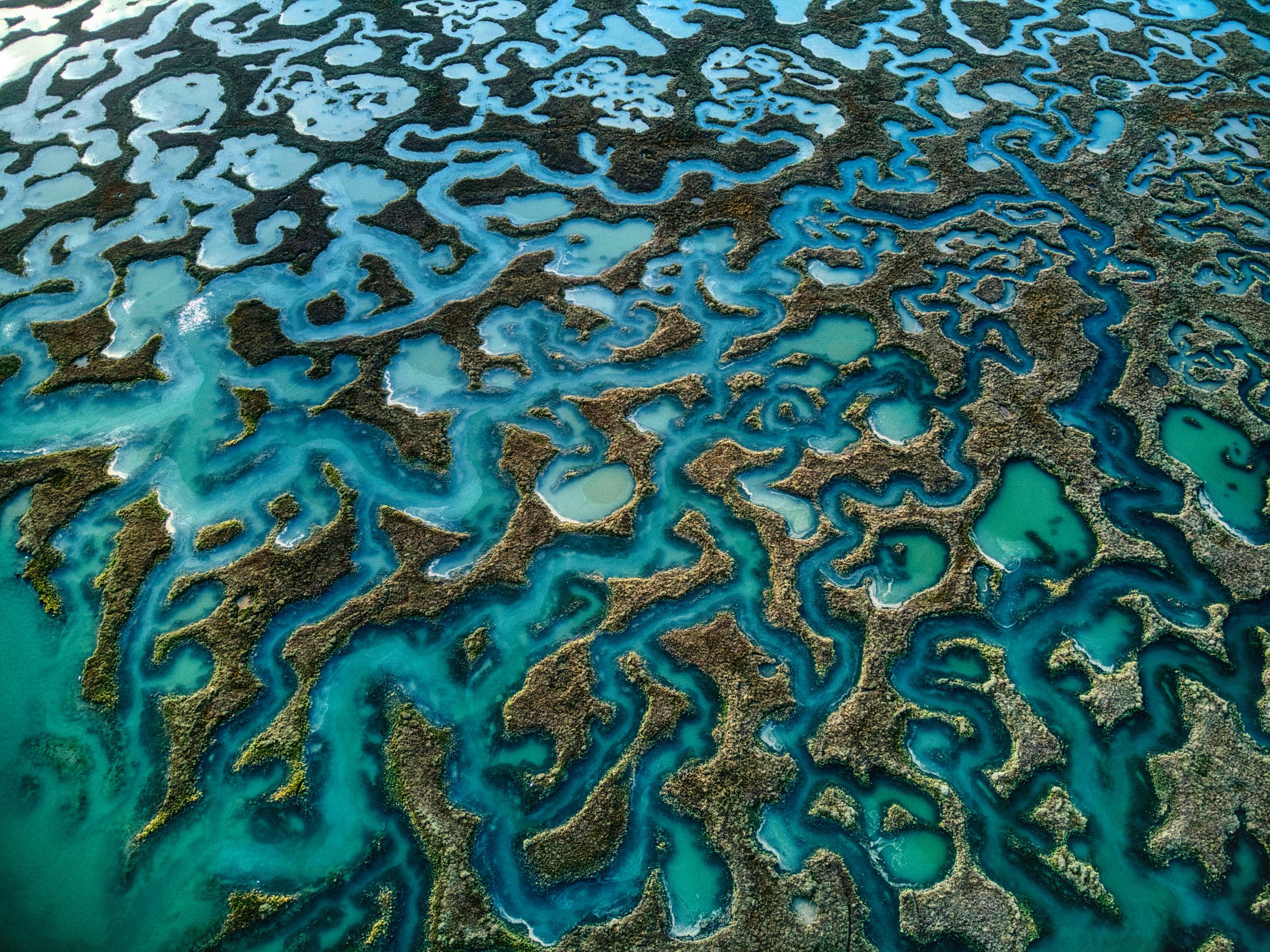
Main image: Jack Coble, Unsplash
Have a query?
Contact us
communications@unep-wcmc.org