
News
Five steps to strengthen data justice as we conserve 30% of the planet
Comment | Apr 2026
Most conservation data are biased and unjust. Jasmin Upton and Sol Fernandez share how the Protected Planet Initiative at UNEP-WCMC is addressing data justice for protected and conserved areas.
Data are never an unbiased representation of the world. Rather, datasets are the result of decisions regarding what can and should be measured and often represent only the priorities of the decision-makers.
As a result, there is a risk that datasets marginalize those who are less visible. True data justice ensures that all people, including Indigenous Peoples and local communities, are made visible, represented and treated fairly in the decision-making as to what gets measured and monitored, and in the conservation actions selected based on the data.
Under Target 3 of the Kunming-Montreal Global Biodiversity Framework (KMGBF) governments and other stakeholders bring information together from all over the world to monitor and report on their progress towards conserving 30 per cent of the Earth by 2030. As the global platform where knowledge and data on protected and conserved areas are recorded, the Protected Planet Initiative at the UN Environment Programme World Conservation Monitoring Centre (UNEP-WCMC) plays a crucial role in influencing decisions related to area-based conservation worldwide. We therefore recognize our responsibility to strive for fairness in the way people are represented and affected by Protected Planet data and its use.
Since Protected Planet’s inception, we have been working to address justice-related challenges. In January 2023, UNEP-WCMC experts and academics held a two-day workshop that used data justice principles to further examine the data lifecycle and practices of Protected Planet and develop recommendations for achieving a more just Protected Planet. Following renewed attention in a recent paper from experts on the importance of environmental data justice to achieving area-based conservation goals, here are five ways the team has made progress to ensure the data are more representative, transparent and accessible:
1. Addressing geographic bias
Geographic biases in Protected Planet have long been an issue, with some countries better resourced to gather, standardize and submit quality data. To address this, the team work closely with regional partners and national governments to strengthen countries’ capacity to provide accurate and up-to-date data to the World Database on Protected and Conserved Areas (WDPCA). This includes targeted support for countries with out-of-date data and those that have requested additional support.
Starting in 2014, UNEP-WCMC collaborated on a programme that enabled the development of five specialized data centres called regional observatories across Africa, the Caribbean and the Pacific. These centres provide support to countries on their protected and conserved area data, and are now mandated by the UN Convention on Biological Diversity to support countries in the implementation of the KMGBF.
In partnership with the Bezos Earth Fund, UNEP-WCMC provides tailored country-level support in the Tropical Andes and the Congo Basin to improve national reporting. The Protected Planet team will continue providing targeted support to countries and regions as needed.
2. Strengthening consent and collaboration
Protected Planet’s data reporting process includes a step where data providers are asked to sign an agreement that confirms consent has been given to publish the data, and, where relevant, with the free, prior, and informed consent (FPIC) of Indigenous Peoples and local communities.
Adhering to FPIC processes is critical, both in how data are reported and how sites are recognized. The Protected Planet team have provided technical support to countries on strengthening their approach to FPIC. Peru and Colombia now provide supplementary documentation related to FPIC for ‘other effective area-based conservation measures’ (OECMs). We supported the Colombian NGO Fundación Natura to develop recommendations for adhering to FPIC processes in OECM designation and reporting, which have been shared with the Ministry of Environment and Sustainable Development.
3. Increasing representation of non-state actors
Protected Planet’s data currently have limited representation of conservation efforts by private actors, Indigenous Peoples and local communities. To better reflect the governance diversity of the world’s protected and conserved areas and encourage more complete reporting toward global conservation targets, we are promoting and including areas under the governance of these groups. One way we do this is supporting the identification and reporting of OECMs, with recent examples in the Cook Islands, Colombia, Ecuador and Peru.
We are also incorporating more diverse data sources by supporting direct reporting from non-state actors. Indigenous Peoples and local communities can contribute to the ICCA Registry, a platform that highlights their leadership in conservation and promotes recognition and support for their self-governance and traditional conservation practices. We do this work as part of the ICCA Global Support Initiative, a broader global effort to provide recognition and support for the vital contributions that these groups have made and continue to make to conservation.
4. Supporting data verification and peer review
To maintain the accuracy of data and ensure adherence to FPIC with data reported to the WDPCA, there is a verification step for all data submitted by non-state actors. National governments can verify data, but we’re also working to support alternative non-state mechanisms. For Indigenous Peoples and local communities, verification can be done through national and regional peer-support and review networks made up of other Indigenous Peoples and local communities. We created a manual to support the development of such networks, compiling the contributions and advice of networks that have already developed these processes.
5. Enhancing accuracy and accessibility of data
Protected Planet has made its guidance materials and resources more accessible and reflective of diverse governance structures. This includes dedicated guidance for reporting privately governed and Indigenous and community-led protected and conserved areas. Alongside this, we have expanded the Global Database on Protected Area Management Effectiveness (GD-PAME) to better capture information on the effectiveness of sites, covering the quality of governance, management and biodiversity outcomes, with an accompanying new manual to support reporting. The WDPCA database structure has also been updated and now includes a new field that allows data providers to give visibility to the actors involved in shared governance arrangements.
These efforts make it easier for data providers to contribute more accurate and comprehensive information to Protected Planet and provide additional transparency for users on the quality of sites, including whether they are governed equitably.
Next steps for data justice in Protected Planet
There is still much to be done. Future work being considered includes making the database and website available in more languages, providing a stronger mechanism for Indigenous Peoples and local communities to dispute data and a mechanism to support the verification of data from private actors.
These ongoing and future actions will help to ensure that Protected Planet is a reliable, inclusive and accessible platform to monitor progress on all elements of Target 3 in a more just way.
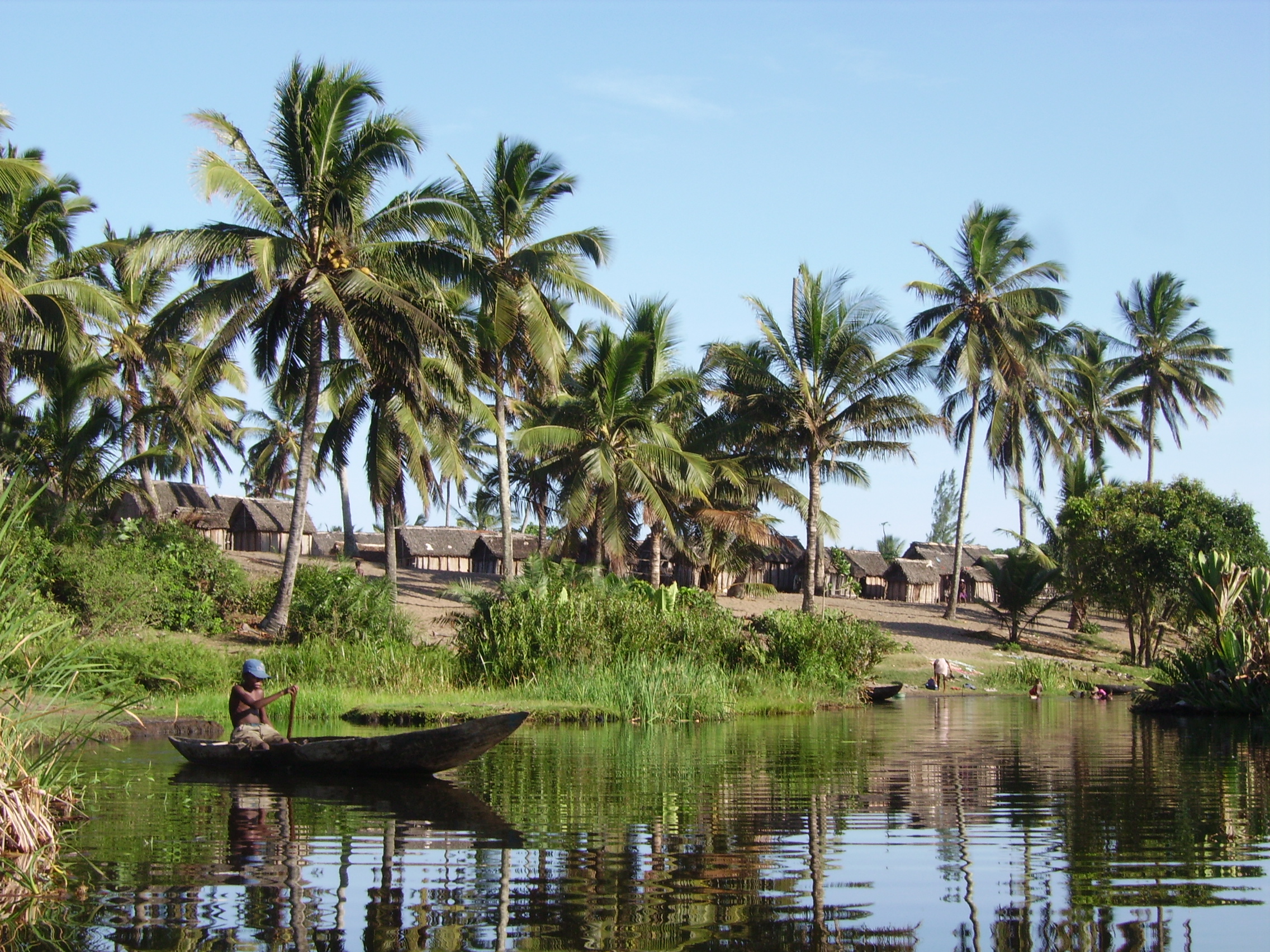
Main image: A riverside village along the Canal des Pangalanes in Madagascar (Elise Belle)
Have a query?
Contact us
communications@unep-wcmc.org