
News
Four migratory birds that now have stronger international protections

Story | May 2026
Our conservation experts highlight four species that governments recently recognized need greater protections and explain how these decisions can lead to positive outcomes for the world’s long-distance migrants
The only global treaty focused exclusively on the conservation of migratory species recently brought governments together in Campo Grande, Brazil. A team of experts represented the UN Environment Programme World Conservation Monitoring Centre (UNEP-WCMC) at the Fifteenth Meeting of the Conference of the Parties to the Convention on the Conservation of Migratory Species of Wild Animals (CMS COP15).
Over the week in March, we presented the key findings of the interim State of the World’s Migratory Species report at the opening press conference and to the Plenary, engaged in Working Group discussions and supported our key partners.
We were delighted that the COP concluded successfully, with governments agreeing new commitments and measures that will advance conservation efforts for migratory species, including greater protection for 40 animals. Ahead of World Migratory Bird Day we celebrate the decisions that were made for four species in particular:
Barau’s petrel
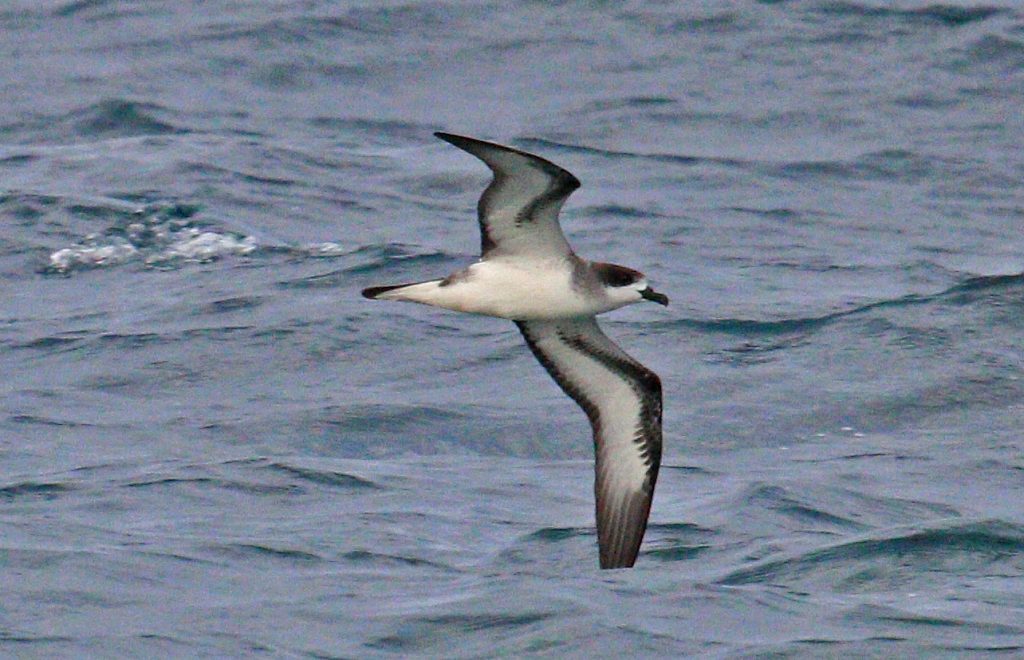
Barau’s petrel is an iconic seabird of the Indian Ocean flyways, with a beautiful white-and-black underwing pattern that’s visible as it flits rapidly over the waves. It breeds only on the island of Réunion and can travel up to 600 km a day as it migrates seasonally across the Indian Ocean.
We haven’t had long to study this bird; it was only scientifically described in the 1960s and is already Endangered with as few as 30,000 individuals left. Despite this, along with 25 other small migratory seabirds that were added to the CMS Appendices at COP15, Barau’s petrel was previously not protected by any international laws.
It’s reassuring that governments recognized that the Barau’s petrel needs help by agreeing to move it to Appendix I, giving the highest level of protection under the Convention. The Resolution on marine flyways should also help, as Parties have agreed to enhance research, share expertise and cooperate to address the threats to migratory seabirds.
Frances Davis, Connectivity Conservation Lead
Hudsonian godwit
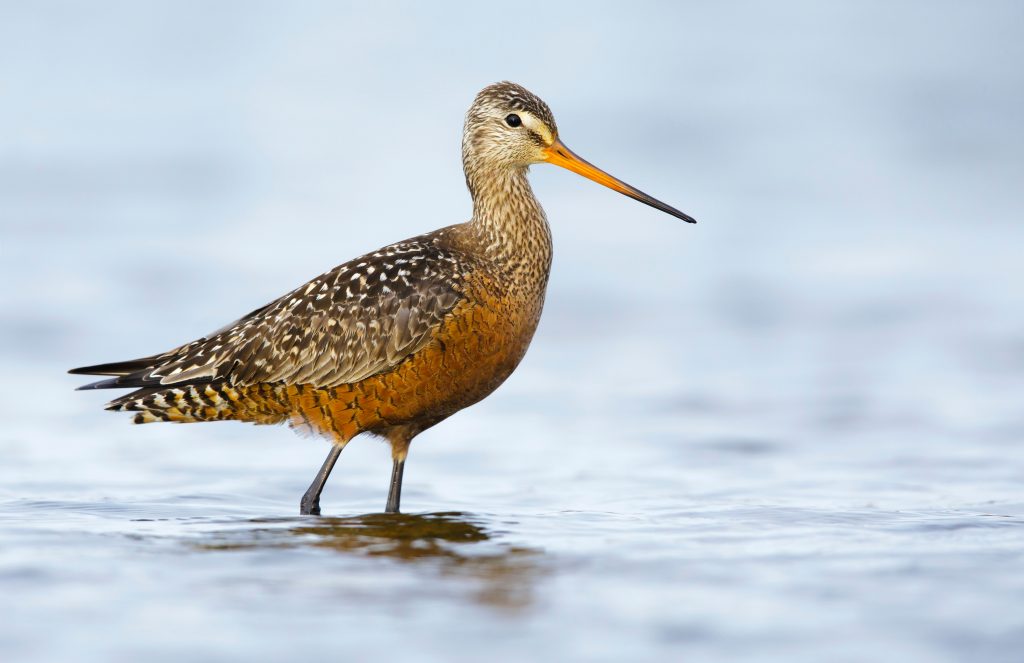
One of the key findings of the interim State of the World’s Migratory Species report was that shorebirds are in trouble. Of the 26 CMS-listed species that have suffered from an increased risk of extinction in the last two years, 18 were migratory shorebirds.
The Hudsonian godwit is an emblem for many of the problems facing our migratory shorebirds. It’s losing its wetland habitat due to human activities such as aquaculture. It is also suffering from the impacts of climate change, as well as by overexploitation at stopover sites.
This remarkable, large shorebird undertakes one of the longest-known migrations, from Canada and Alaska to southern South America, and it can fly non-stop for over a week. Its listing on Appendix II will be a boost for existing cooperation throughout the Americas.
Matea Vukelic, Programme Office, Policy
Ibera seedeater
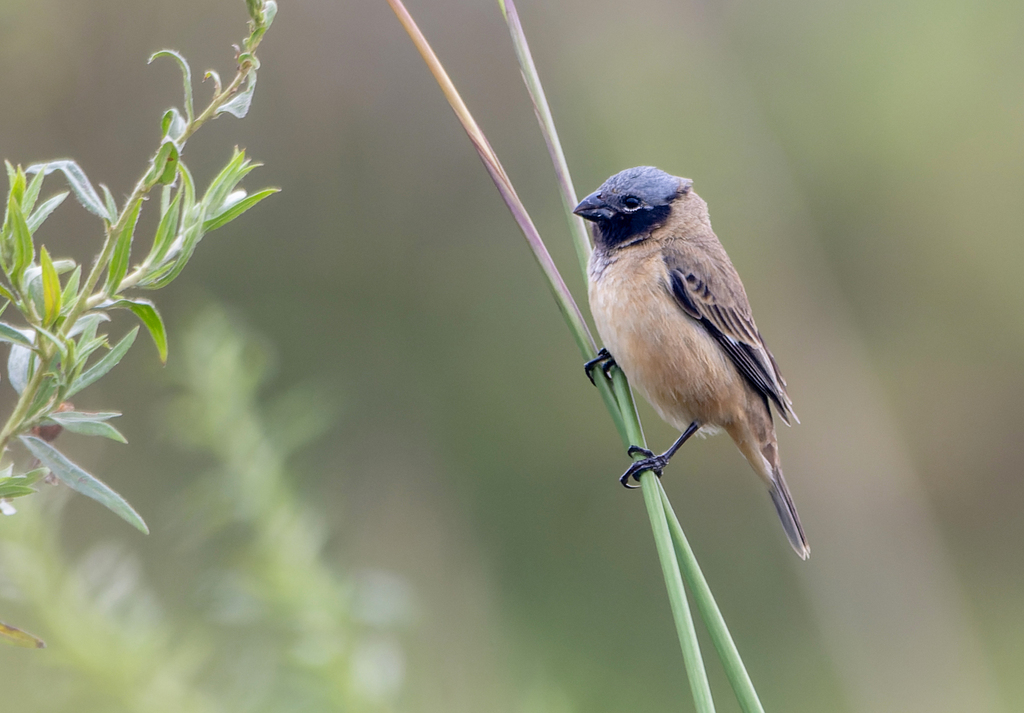
The Ibera seedeater, which is a type of finch-like songbird, was only scientifically described in 2016. Despite knowing very little about it, researchers believe there are fewer than 10,000 left. It depends on seasonally flooded or wet grasslands, which are being lost throughout its range in South America at an alarming rate as natural grassland is lost to agriculture, or damaged by overgrazing, wildfires and invasive grass species. Globally, grassland habitats are at risk, poorly protected and undervalued, despite their incredible biodiversity.
It would have been amazing to catch a glimpse of the Ibera seedeater after CMS COP15, when I had a chance to explore and see some of Brazil’s incredible wildlife. Unfortunately, this enigmatic little bird, with its contrasting black, grey and sand-coloured plumage, is very rare and can only be found in a few locations. Hopefully being listed on Appendix II will bring greater visibility to the seedeater and other threatened migratory birds that rely on South American grasslands and wetlands, and in turn help to protect the habitat they depend on.
Andrew Szopa-Comley, Scientific Officer
Snowy owl
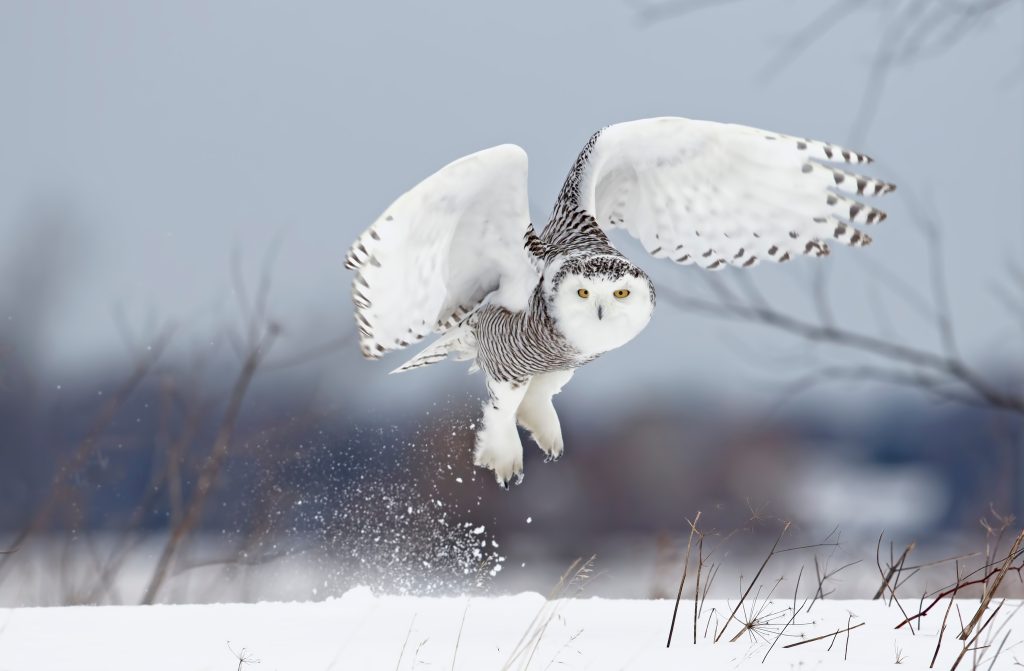
The snowy owl is highly nomadic and unpredictable – which makes seeing them in the wild particularly difficult, and makes researchers’ jobs that much harder. They move enormous distances and often nest in different locations year-to-year. This is one of the reasons the Appendix II listing is good news: it should lead to more data being shared across borders, so that we fill in data gaps and gain a better understanding of why snowy owl populations have declined rapidly in recent years.
The snowy owl is an iconic Arctic species, so I was incredibly excited when I first saw one in the Outer Hebrides of Scotland – where it’s only an occasional visitor – back in 2012. It was a distant but unmistakable white blob, shimmering in the summer heat haze amongst the flowers of the machair grasslands. Since I saw it just over a decade ago, the species has moved from ‘Least Concern’ to ‘Vulnerable’ on the IUCN Red List. Improved cooperation on research and monitoring will ultimately help to develop targeted conservation actions that can make a real difference for this species.
Kelly Malsch, Head of Conservation
Important agreement on monitoring conservation efforts
Ensuring that birds like the snowy owl and Ibera seedeater have a future requires us to track the steps that are being taken to conserve migratory species internationally, and whether these measures are having a positive impact at the global level. At CMS COP15, one of our major contributions was to help governments establish a clear process for understanding the extent to which collective commitments for migratory species have been carried out and are leading to positive change. We did this through our work to develop a monitoring framework for the CMS Strategic Plan for Migratory Species, which sets objectives for the Convention until 2032.
In the lead-up to the meeting we worked closely with CMS Parties, the CMS Scientific Council and the Secretariat to identify which metrics could be used to measure progress against the six goals and 23 targets of the Strategic Plan and develop a monitoring framework. Before the end of the meeting the Parties reached consensus to adopt this framework, supported by our team throughout the discussions and in finalizing the document. The final framework contains a balance between metrics that focus on species, their habitats, the pressures facing them, as well as measures of the degree of progress Parties are making to improve legislation, develop action plans and enhance cooperation.
We continue to work closely with Parties and the Secretariat on the next steps for putting the framework into practice – to track and drive progress on the urgent actions now needed to save the world’s migratory animals.
Main image: Hudsonian godwits (Image: Adobe_750040668)
Have a query?
Contact us
communications@unep-wcmc.org