
News
Nature across society and the economy: UNEP-WCMC’s 2025 Impact Report
Impact | Jun 2026
UNEP-WCMC proved that determination, collaboration and scientific rigour can move the needle for nature action, even in turbulent times.
The UN Environment Programme World Conservation Monitoring Centre (UNEP-WCMC) released its 2025 Impact Report today. The report highlights crucial developments for nature.
In 2025, we proved that with quiet persistence environmental progress can be achieved, even amid changing political winds. Countries, companies and communities increasingly understand and act on the shared reliance that we all have on nature.
We fine-tuned leading tools and catalyzed their widespread adoption. We shared knowledge and provided guidance to governments, companies and communities. We authored pioneering research and input into negotiations at international meetings. To support on-the-ground progress, we ran training and workshops all over the world.
Our latest Impact Report contains multiple examples of how determination, collaboration and scientific rigour continue to move the needle for nature action.
We put nature at the centre of economic decisions
With over half the world’s GDP moderately to highly dependent on nature, nature loss is a matter of growing interest from investors, governments, companies and communities. Last year was pivotal in turning this interest into action across the whole of society.
Following a major update in 2025, our tool for Exploring Natural Capital Opportunities, Risks and Exposure (ENCORE) was used with increasing frequency. This free digital tool, developed in collaboration with Global Canopy and the UNEP Finance Initiative, enables users to see how their economic activities depend on and put pressure on nature and natural resources. Registered users grew by almost 50 per cent last year, with Scottish Widows and BNP Paribas among the financial institutions using it as the foundational map of their reliance on nature.
We also worked at the national level to drive action on the economic risks posed by nature loss. Our economists worked with policymakers in five countries to explore how essential data and modelling tools can embed nature into decision-making. The Nature Transitions Support Programme (NTSP) led to real-world nature action in 2025, with Ecuador creating new policies and plans for nature.
We collaborated with forward-thinking multinational companies to support them as they continue to internalize and manage biodiversity risk. Thanks to the Proteus Partnership, major companies across sectors are sharing and building on their experiences of how nature action is not a compromise but a competitive advantage in a fast-changing world.
And we supported communities as they worked to generate returns from protecting and restoring nature. In Nepal, more than 22,000 community forest groups manage 2.4 million hectares of land, which has helped forest cover rebound to an impressive 46 per cent of the country’s area. In 2025, with our support through the UN REDD programme, the government established an Emission Reductions Purchase Agreement (ERPA) in collaboration with the Lowering Emissions by Accelerating Forest finance coalition (LEAF).
Nature is increasingly making its way into mainstream decision-making. That has not come about by chance: it is the result of ensuring that decision makers have access to trusted knowledge, tools and data, and nurturing collaborations for their use. This is vital work, especially as the world steps up progress towards the 2030 targets of the Kunming-Montreal Global Biodiversity Framework. UNEP-WCMC is proud of our contribution to these impacts in 2025, and we continue to learn and grow as we move ahead in 2026 with our dedicated team of professionals and extensive network of partners.
Neville Ash, Director of UNEP-WCMC
From Nepal's forests to Botswana's boardrooms: people and nature in harmony
Our societies and economies are built on the foundations of nature's contributions to people. UNEP-WCMC's work in 2025 contributed to the world making its way towards living in harmony with nature.
We heightened understanding of the importance of nature for livelihoods and culture. We played a pivotal role in the growing sophistication of international wildlife trade governance. Our insight led to increased protection for species in international trade, and a ground-breaking paper on the distribution of the planet’s most-used plants went on to have a second life influencing conversations in boardrooms and Indigenous territories.
The importance of nature to societies was particularly prominent in our work through the National Ecosystem Assessment (NEA) Initiative. The NEA Initiative supports science-policy processes in countries to determine the condition of ecosystems and how land use, climate change and biodiversity trends affect societies and economies, for example through agricultural productivity and disaster resilience. Last year, Malawi’s assessment findings were actively integrated into national policies. In Botswana, findings were embraced at the highest levels of government.
Protected and conserved areas contribute important ecosystem services to societies – from fresh water, clean air and sustainably gathered materials to livelihood opportunities, tourism and spiritual well-being. In 2025, we were involved in important work to develop systems for recognizing conservation taking place outside of formal protected areas. In Colombia we supported a robust national process for identifying candidate conserved areas that resulted in the recognition of 22 new areas in 2025. Through our support to a similar system in Peru six new areas were reported, three at the request of Indigenous communities.
The challenges ahead are formidable. But our achievements in 2025 demonstrate what becomes possible when trusted knowledge is put to work, when science shapes decisions and when partnerships are at the heart of our approach. A future where nature and people can thrive together is not just imaginable, but achievable - and we continue our work with this vision and inspiration at its heart.
Download the full Impact Report 2025 here
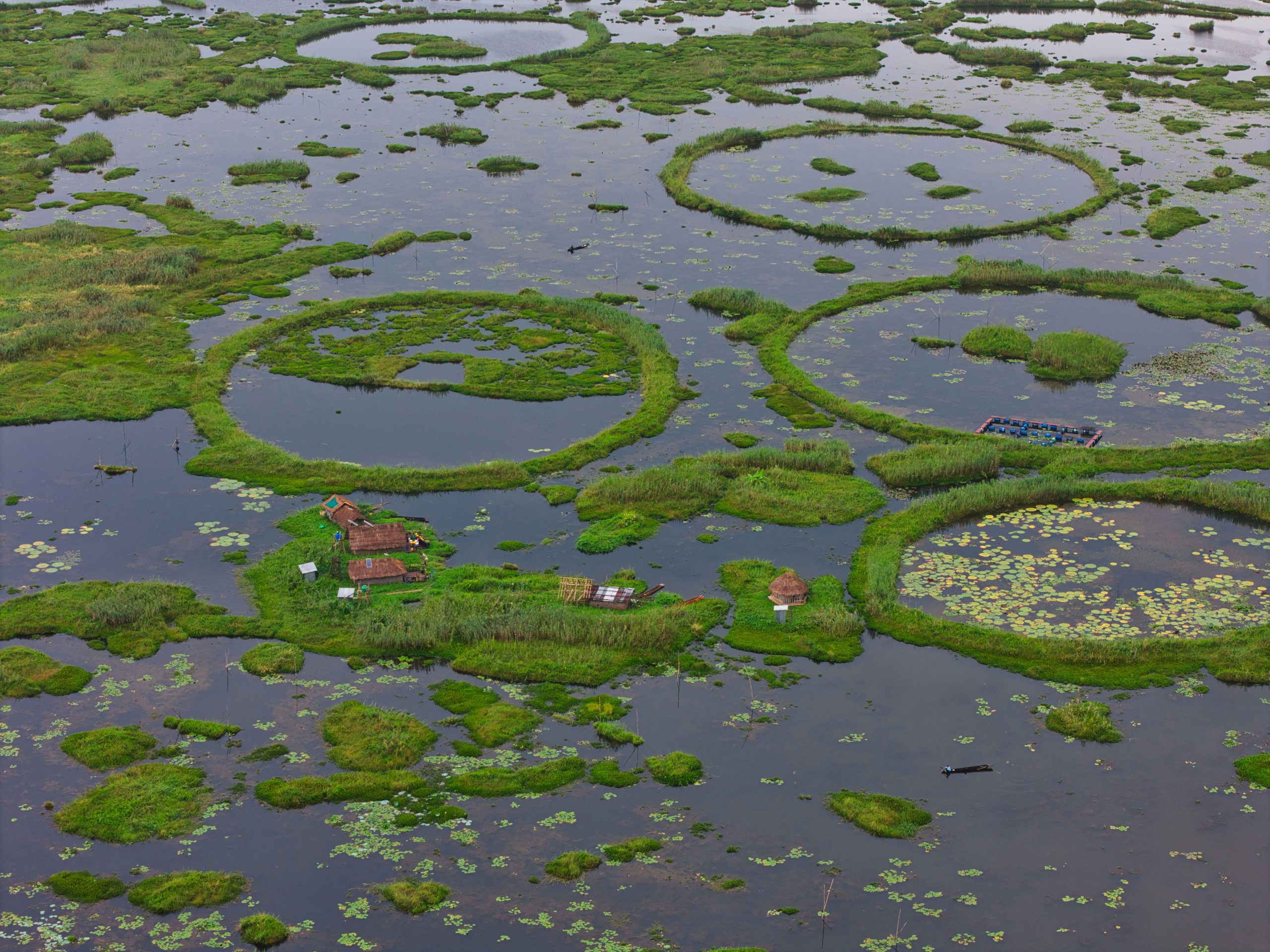
Main image: Many people build their homes on the floating islands of vegetation and soil found on Loktak Lake, India, depending on fish in the lake’s waters and living in harmony with nature (© sayan Nath | Unsplash)
Have a query?
Contact us
communications@unep-wcmc.org