
News
UNEP-WCMC hosts third Nature Action Dialogues
News | May 2026
UNEP-WCMC hosted the 2026 Nature Action Dialogues to foster private sector collaboration and action for nature.
A whole-of-society approach is needed to meet ambitious global biodiversity targets by 2030. The Kunming-Montreal Global Biodiversity Framework (KMGBF) sets out 23 major biodiversity targets to achieve by 2030, from conserving and restoring ecosystems to aligning financial flows to support biodiversity outcomes.
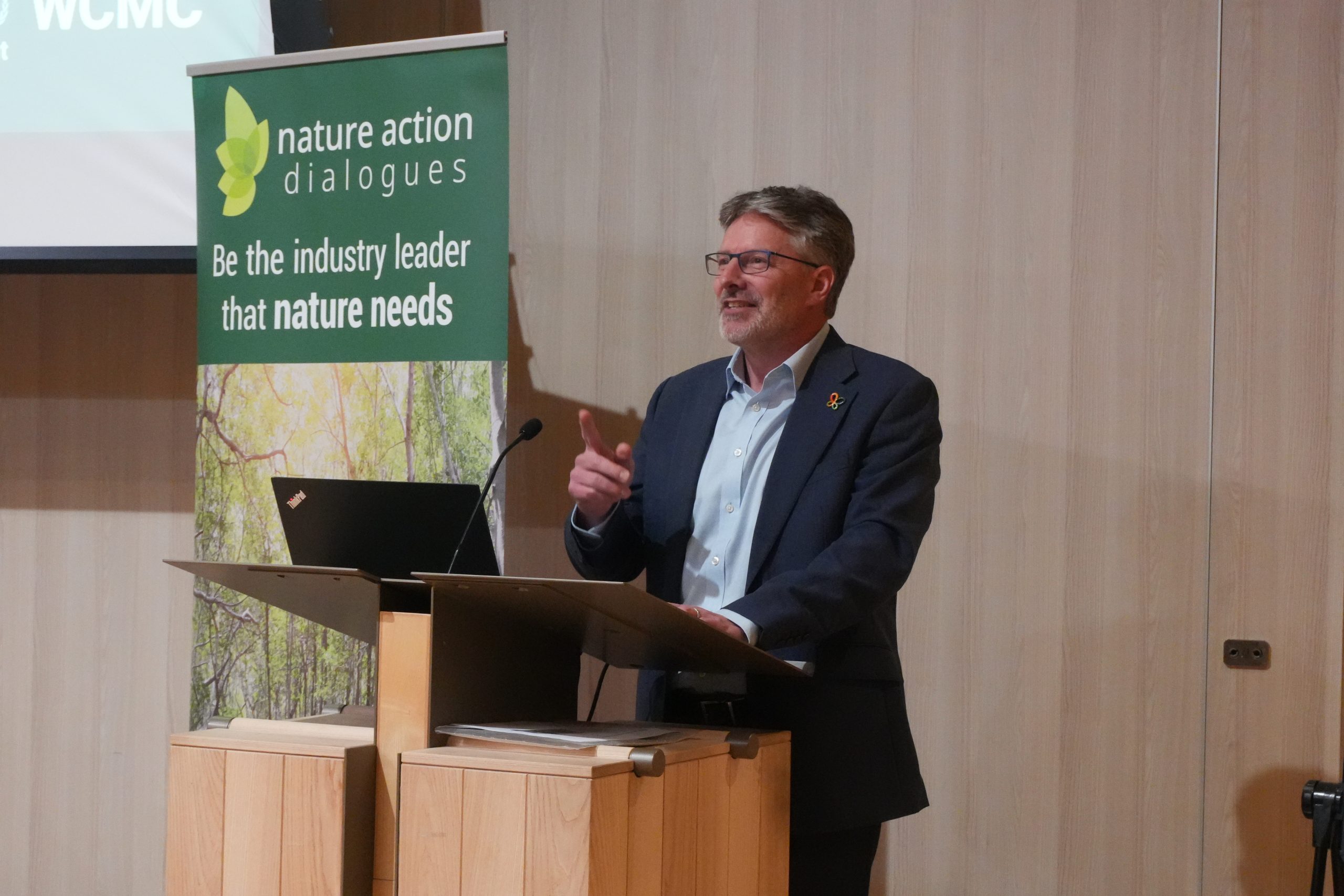
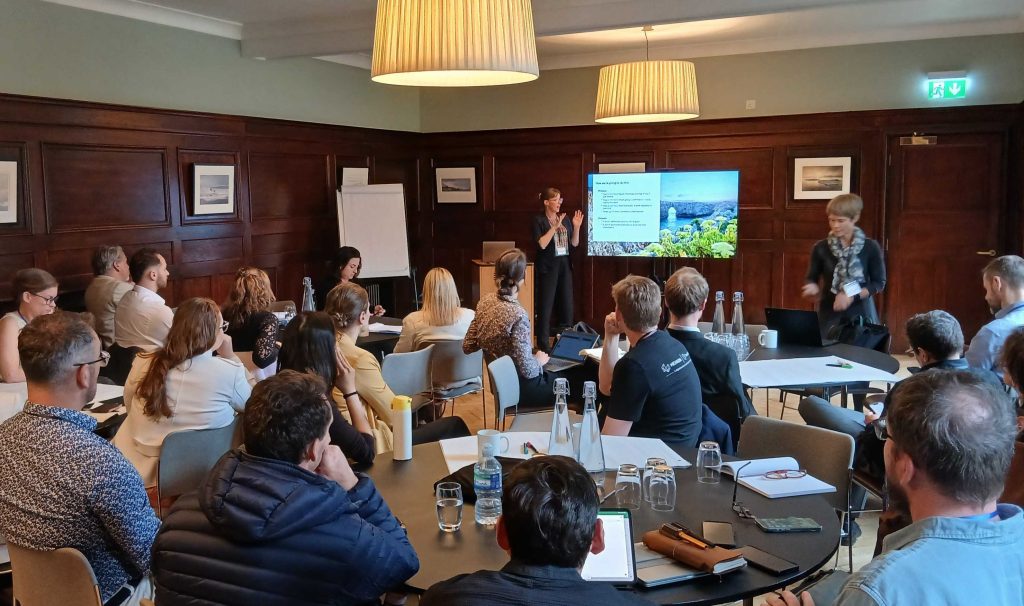
Earlier in May, UNEP-WCMC hosted this year’s Nature Action Dialogues, which explored the critical need and options to scale private sector nature action, as part of its theme ‘Countdown to 2030: Aligning Ambition, Scaling Integrated Action’. The Nature Action Dialogues brought together businesses and financial institutions with leading biodiversity experts, to discuss approaches to integrate nature into corporate decision-making.
Now in its third year, the Dialogues facilitate genuine private sector collaboration through expert, business and finance-led interactive workshops. Here, we highlight some of the key outcomes from this year’s Dialogues.
Aligning action across scales: from local to global
With the IPBES Business and Biodiversity Assessment launching in February this year, there is now a clear and robust scientific foundation for the relationships between business and biodiversity. The assessment provides clarity to enable businesses and financial institutions to take action to safeguard nature and reduce nature-related risk across their operations, supply chains and investment portfolios.
The assessment sets out key actions businesses can take to ensure that nature thrives, and to safeguard the ecosystem services on which companies and people depend. It shares the current state of knowledge on the connections between business and biodiversity, exploring themes from nature measurement through to mobilizing finance for nature. The Nature Action Dialogues’ opening plenaries considered how businesses can best follow through with these actions, as well as mechanisms for changing financial systems.
The opening panellists also highlighted the importance of building trust with local communities and stakeholders along value chains. Trust enables collaboration across complex value chains to better align local with global action. Working with communities is key as there is no one-size-fits-all approach to achieving global goals. An example of this was highlighted in a session on scaling biodiversity in the food sector, which stressed the importance of having expert intermediaries between retailers and farmers. These intermediaries can support farmers with finding opportunities to protect biodiversity at the farm-scale and help to monitor progress towards wider goals. This enables aligned action across value chains.
Ensuring decision-making is driven by the latest biodiversity science
Action is most effective when it is evidence-driven, whether from science, or insights from local communities. Various sessions explored the best practice in harnessing data and tools, such as Exploring Natural Capital Opportunities, Risks and Exposure (ENCORE), which helps companies identify their nature-related dependencies, impacts, risks and opportunities. As part of this year’s event, the Integrated Biodiversity Assessment Tool (IBAT) team also launched a new tool to assess species' extinction risk.
However, companies can find it challenging to navigate all the different tools available. A key takeaway from this year’s Dialogues was that using a range of approaches is better than just applying one. How nature is measured depends on the type of landscape, decisions being taken and the kind of knowledge being considered – whether species data or traditional knowledge. Applying a variety of approaches allows for a wider range of these points to be integrated, a principle that the Nature Tools Compass enables. One session also explored the possibility of a Nature Measurement Protocol, to provide clear overarching guidance on nature measurement.
Financing nature action
Investments that degrade nature outnumber those protecting nature at a ratio of 30:1. This needs to change, and financial flows must be redirected to activities that conserve and restore nature if we are to meet the KMGBF’s 2030 targets. A session with the World Economic Forum shared 10 key solutions to help close this finance gap, with 50 specific investment opportunities across different sectors. For example, one largely untapped opportunity for investment is the blue economy, to better ensure marine ecosystems are safeguarded for continued benefits for people and nature.
Another key insight for many at the Dialogues is that nature-related risks are already impacting business activities. This year’s Dialogues hosted a debate on whether nature-related risk was already a real financial threat for companies. The case was successfully made that businesses face supply chain disruptions due to nature-related shocks. For example, the clearing of habitats is hindering local climate regulation, making crops more vulnerable to extreme weather events. This vulnerability often results in decreased yields and particularly affects smallholder farmers. At present, financial markets respond to these risks only when they are realized. Once they have already affected supply chains. However, there are clear advantages in proactively accounting for – and managing – such risks.
The opening plenary session on ‘Applied Hope for Biodiversity’ highlighted that companies and financial institutions are starting to take nature risk seriously. Drawing on perspectives spanning policy, private finance, nature markets and disclosure, panellists explored which signals can genuinely shift financial behaviour to align with ambitions for nature. They highlighted what a credible path to 2030 looks like from those closest to capital-allocation decisions, including opportunities for redirecting harmful financial flows and increasing finance for activities that support nature.
Systemic solutions drawing on available knowledge
Biodiversity knowledge takes many forms, including the latest science and the long-standing traditional knowledge belonging to Indigenous Peoples and local communities. Representatives from Indigenous-led companies joined the Dialogues to share examples of what transformative business practices could look like. These include shifting the mindset underlying business-as-usual, moving from maximizing shareholder value to providing goods and services that meet people’s needs whilst living in harmony with nature.
We will release details about the 2027 Nature Action Dialogues in the coming months. Please email communications@unep-wcmc.org to register early interest.
Main image: Neville Ash, UNEP-WCMC director, addresses the closing plenary at the Nature Action Dialogues (© UNEP-WCMC)
Have a query?
Contact us
communications@unep-wcmc.org