
News
What Transformative Change for Biodiversity Really Means
Opinion | Nov 2025
Reflections on transformative change from the Biodiversa+ Midterm Conference.
Author: Dr. Boipelo Tshwene-Mauchaza, Technical Specialist in Nature-Based Solutions for Climate Change Mitigation and Adaptation, UNEP-WCMC
Last month, I had the privilege of attending the Biodiversa+ Midterm Conference at the Naturalis Biodiversity Centre in Leiden, The Netherlands. This gathering brought together a diverse range of stakeholders, from policymakers to researchers, to reflect on the achievements of this European Biodiversity Partnership (Biodiversa+) and chart the path forward for biodiversity governance, research and action across Europe.
As a technical specialist working at the interface of science and policy, ensuring that climate change and biodiversity strategies are grounded in evidence, and now increasingly shaped by the lens of transformative change, I was honoured to be invited as a panel speaker on advancing transformative change impact in EU research. This was an invitation that stemmed from my work exploring how Nature-based Solutions promote transformative change for sustainable biodiversity management in socio-ecological systems. This conference prompted considerable reflection and raised a number of questions to be explored in subsequent discussions and research, on exactly what transformation should do.
What unfolded over those two days revealed both the promise and the challenge of achieving genuine transformation in how we approach biodiversity.
What Does Transformative Change Really Mean?
This question sat at the heart of the transformative change discussions at Biodiversa+. The conference shared compelling outputs from their transformative change flagship initiative, revealing both the scope of ambition and the complexity of implementation.
The dialogue event on transformative change for biodiversity produced clear recommendations:
- Enhance capacity building and transdisciplinary research
- Use local knowledge internationally
- Involve stakeholders in co-designed and co-implemented projects
- Improve communication with policy advisors and decision-makers
Two priority themes emerged: transformative change for biodiversity and economic systems, and transformative change for biodiversity and public policy.
But what does "transformative change" actually mean? According to IPBES, transformative change is a fundamental, system-wide reorganization across technological, economic and social factors (IPBES 2019). The conference discussions emphasized that it requires a paradigm shift, challenging our current vision of quality of life and moving beyond anthropocentric perspectives. It demands a whole-of-society approach that:
- Integrates rather than siloes: Moving from sectoral to integrated approaches
- Promotes collaboration and literacy: Encouraging cooperation and facilitating biodiversity literacy among all stakeholders
- Centres equity and justice: Reflecting on how a just transition can benefit biodiversity
- Develops practical innovations: Creating democratic tools to assess biodiversity impacts and dependencies
Rethinking Relationships, Not Just Results
In my panel remarks on advancing transformative change impact in EU research, I offered a perspective that has fundamentally shaped how I understand transformative change in the context of Nature-based Solutions – transformative change is about the quality of relationships.
Transformative change is less about the magnitude of change or the speed at which change occurs, and more about whether the change addresses the underlying structures, views and practices that created the problems in the first place. It manifests in the quality of relationships between communities and ecosystems, between different scales of governance, between different ways of knowing and between different knowledge systems.
This is what distinguishes transformative change from incremental improvement. We can have impressive metrics, sophisticated frameworks and ambitious targets, but if we are not questioning the fundamental assumptions and power structures that drive biodiversity loss, we are not achieving transformation or simply lasting change. We are simply managing decline more efficiently.
To close the gap between our ambition for transformative change and the reality of how research and policy work, we need to stop optimizing within existing systems and start questioning whether the systems themselves need to change.
We are working on issues like this at UNEP-WCMC, in particular we are looking at the underlying drivers of biodiversity loss and how the way we govern our economies drives the negative interactions between biodiversity and the economy, which creates both ecological and economic risks.
The Evidence from Global Research
A presentation on mapping international scientific collaborations on biodiversity and transformative change between 2013 and 2023 provided crucial context. An analysis of 13,000 scientific publications revealed that 95% focus on agriculture, environment, ecology and social sciences. There is strong international collaboration, particularly between the European Research Area and North America, though significant disparities exist, with regions such as Africa and parts of Europe remaining underrepresented.
This research landscape shows us that scientists worldwide are uniting to address biodiversity loss, but it also raises questions. Are we collaborating with the right voices? Are we integrating diverse knowledge systems? Are the structures of research collaboration themselves transformative, or do they reinforce existing power dynamics?
The Courage to Transform
Here is what the conference crystallized for me: we have the knowledge, the frameworks, the economic arguments and growing political will. What we often lack is the openness and courage to truly transform, to let go of what is comfortable and familiar in order to embrace something fundamentally different.
One of my favourite quotes speaks to this: Romans 12:2, "Do not conform to the patterns of this world, but be transformed by the renewing of your minds."
Achieving transformative change requires renewing our views, our practices and our structures. We cannot simply conform to business and political establishments as they currently exist. We must shed old habits and ways of thinking if they no longer serve us. Like a caterpillar becoming a butterfly, transformation brings an end to the old and a beginning to the new.
This is not comfortable work. It requires us to challenge deeply held assumptions about growth, progress, and human relationships with nature. It asks us to recognize that protecting biodiversity isn't merely a technical or policy challenge, it's a question of how we organize society, distribute resources, value knowledge and define wellbeing.
From Dialogue to Action
The Biodiversa+ conference demonstrated that critical conversations are happening at the highest levels of European biodiversity research and policy. Business leaders are engaging, financial institutions are making commitments and researchers are collaborating across borders and disciplines.
But transformation will not come from dialogue alone. It requires the courage to dismantle systems that aren't working, to redistribute power to marginalized voices and regions, to value different forms of knowledge equally and to rebuild our relationship with nature from the ground up.
The gap between theory and practice in Nature-based Solutions mirrors a larger gap between our transformative ambitions and our transformative actions. Closing this gap means moving beyond incremental adjustments and embracing the discomfort of genuine change.
The caterpillar doesn't gradually become a butterfly, it dissolves completely before emerging as something new. Perhaps that's the level of transformation biodiversity truly needs from us. Not optimization, but metamorphosis.
The question is: are we ready?
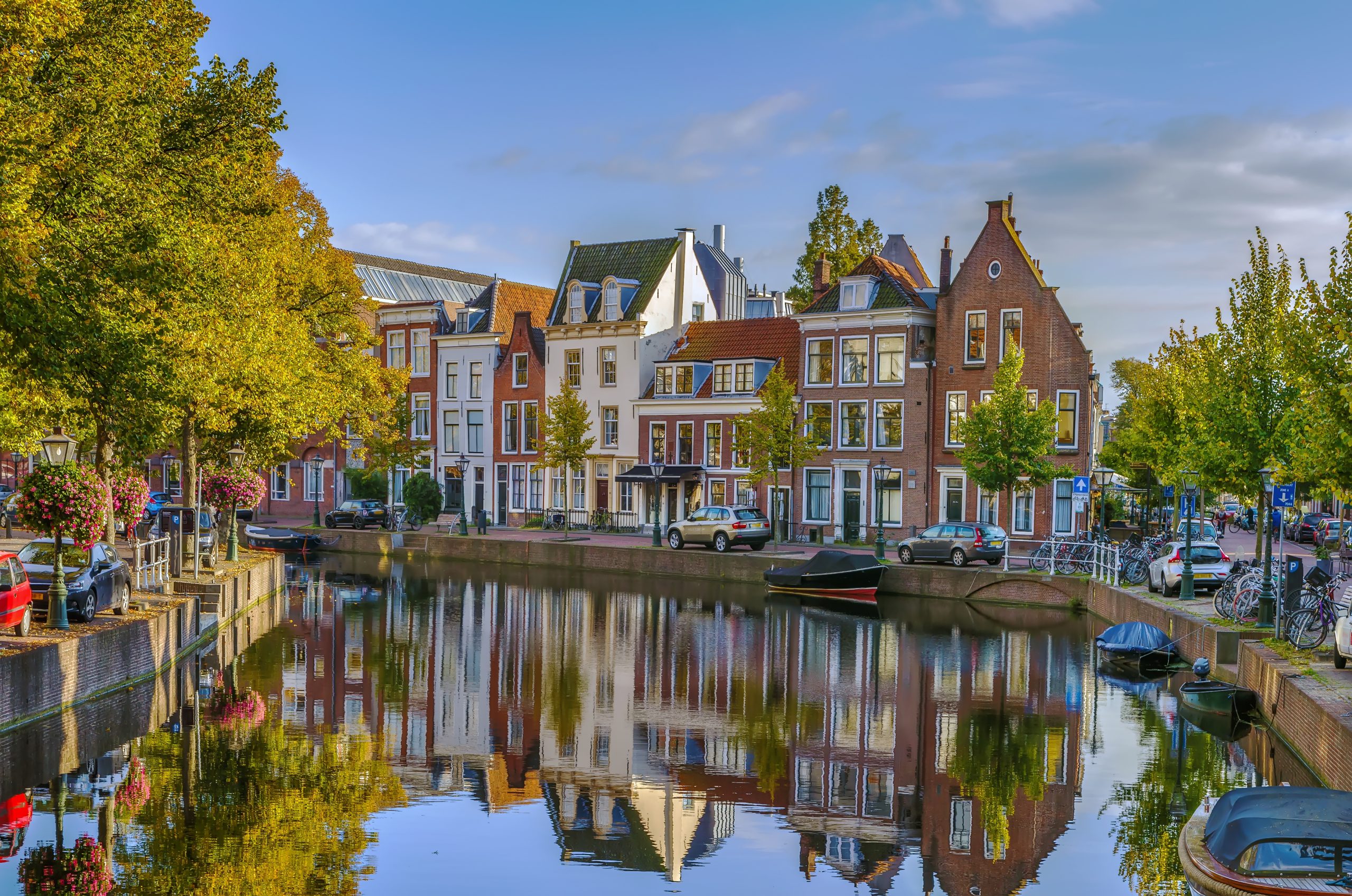
Main image: Channel in Leiden, Netherlands, AdobeStock #136275553
Have a query?
Contact us
communications@unep-wcmc.org