
News
What’s next for biodiversity conservation? Insights from the 2026 Horizon Scan
News | Jan 2026
The now published 2026 Global Horizon Scan highlights 15 emerging issues for biodiversity conservation in the decade ahead.
Author: Dr. Thiago Uehara, Principal Specialist, Nature-Based Solutions team
Each year, a panel of conservation scientists, policymakers and practitioners work together to identify issues that could shape biodiversity action in the decade ahead. The 2026 Global Horizon Scan, now published in Trends in Ecology & Evolution, highlights 15 emerging issues — from new AI tools and shifts in global food demand to changes in ocean dynamics and forest finance. UNEP-WCMC contributed to the process this year, building on our established engagement in this process. The exercise remains a testament to the long-standing leadership of Professor Bill Sutherland and Dr Ann Thornton, who continue to guide a thoughtful and rigorous approach to collective foresight.
The scan aims to spot early signals that may not yet be on policy agendas but could soon become important for nature and people. This kind of forward thinking is increasingly needed as environmental change, technology and global development pathways evolve together.
Signals from the planet: soil, seas and ecosystems
Several of the issues point to large-scale biophysical changes already under way. Evidence of widespread soil moisture decline suggests growing pressure on terrestrial and freshwater ecosystems, with implications for food production, biodiversity and water security. The identification of ocean darkening — declining light penetration across wide ocean regions — could affect marine productivity and food webs in ways that are only beginning to be understood. Meanwhile, the projected loss of macroalgal – seaweeds – habitats, including kelp forests, highlights the vulnerability of coastal ecosystems to warming and extreme events.
Forests, finance and emerging health-related drivers
The proposed Tropical Forests Forever Facility (TFFF), a Brazil-led initiative framed as expanding Global South leadership in long-term forest finance, remains an important signal of interest in large-scale action. Predictable support for countries maintaining low deforestation remains significant – how the facility is redesigned, including its governance, safeguards and equitable benefit-sharing, will determine whether it can genuinely strengthen locally grounded forest economies.
Another notable signal relates to food systems. The rapid uptake of appetite-suppressing pharmaceuticals may influence demand for land-intensive foods in unexpected ways. If such shifts prove durable, they could alter pressures on land and reshape production systems. Understanding these connections will matter for countries seeking to harmonize food, health and nature goals.
AI, data and the next generation of monitoring
Several of the issues identified in the scan relate to rapid advances in digital technology. Low-power Tiny Machine Learning (TinyML) devices which don’t require an internet connection and optical AI chips which will require minimal energy may soon enable real-time biodiversity detection in remote landscapes. These tools could strengthen the evidence base for conservation decisions, while also raising questions around transparency, data access and energy demand. Ensuring that such technologies work for a wide range of users — including communities with limited digital infrastructure — will be central to how equitably their benefits are shared.
Other emergent issues highlighted by the horizon scan are digital twins – computer simulations of real-world systems, objects, people or processes –, potential biodiversity damage linked to fibre optic drone cables, chemical application for plant development, the effectiveness of soil inoculation, developing food from plastic waste, biophysical changes across the Southern Ocean, impacts linked to mining the deep sea and mirror cells. Taken together, these emerging issues highlight the need for integrated approaches that recognize the interdependence of climate, biodiversity, water and human wellbeing, and how emerging signals are interpreted and acted upon across contexts.
Interpreting emerging issues across contexts
This year’s scan brought together a wide range of expertise, reflecting the depth and breadth required to identify emerging issues with potential global impact. Alongside this, there may be value in complementary work that explores how horizon-scanning issues are interpreted and acted upon across different social, ecological and development contexts. Bringing in perspectives grounded in diverse lived experiences can help ensure that emerging signals are understood in ways that remain relevant, equitable and actionable for nature and people worldwide.
A new focus: Nature for Development
Several of the issues raised in the scan resonate strongly with UNEP-WCMC's new Nature for Development Focal Initiative. The initiative focuses on helping countries place nature and nature's contribution to human wellbeing at the centre of development choices, and to build pathways that are locally grounded, inclusive and sustainable.
Signals from the horizon scan — whether related to food systems, forest economies, climate-linked risks or technological shifts — will shape how development pathways unfold. Our work aims to help partners navigate this uncertainty, strengthen evidence and support development planning that recognizes the interdependence between nature, justice, health and prosperity.
We are keen to collaborate with institutions, governments and research groups exploring these questions and would welcome conversations on future partnerships and projects, as we continue our work to support effective biodiversity action.
Looking ahead
The 2026 horizon scan does not predict the future, but it helps us prepare for it. By engaging early with emerging issues, we can help shape conditions that allow nature and people to thrive. UNEP-WCMC will continue contributing to this collective effort — bringing together science, practice and diverse knowledge — to support decisions that are both future-fit and grounded in real-world needs. Our work over the next four years will address many of these key emergent issues, from ensuring nature and human well-being are factored into policy choices, to better understanding the potential of AI in supporting biodiversity action.
Please reach out to communications@unep-wcmc.org with any questions related to this blog.
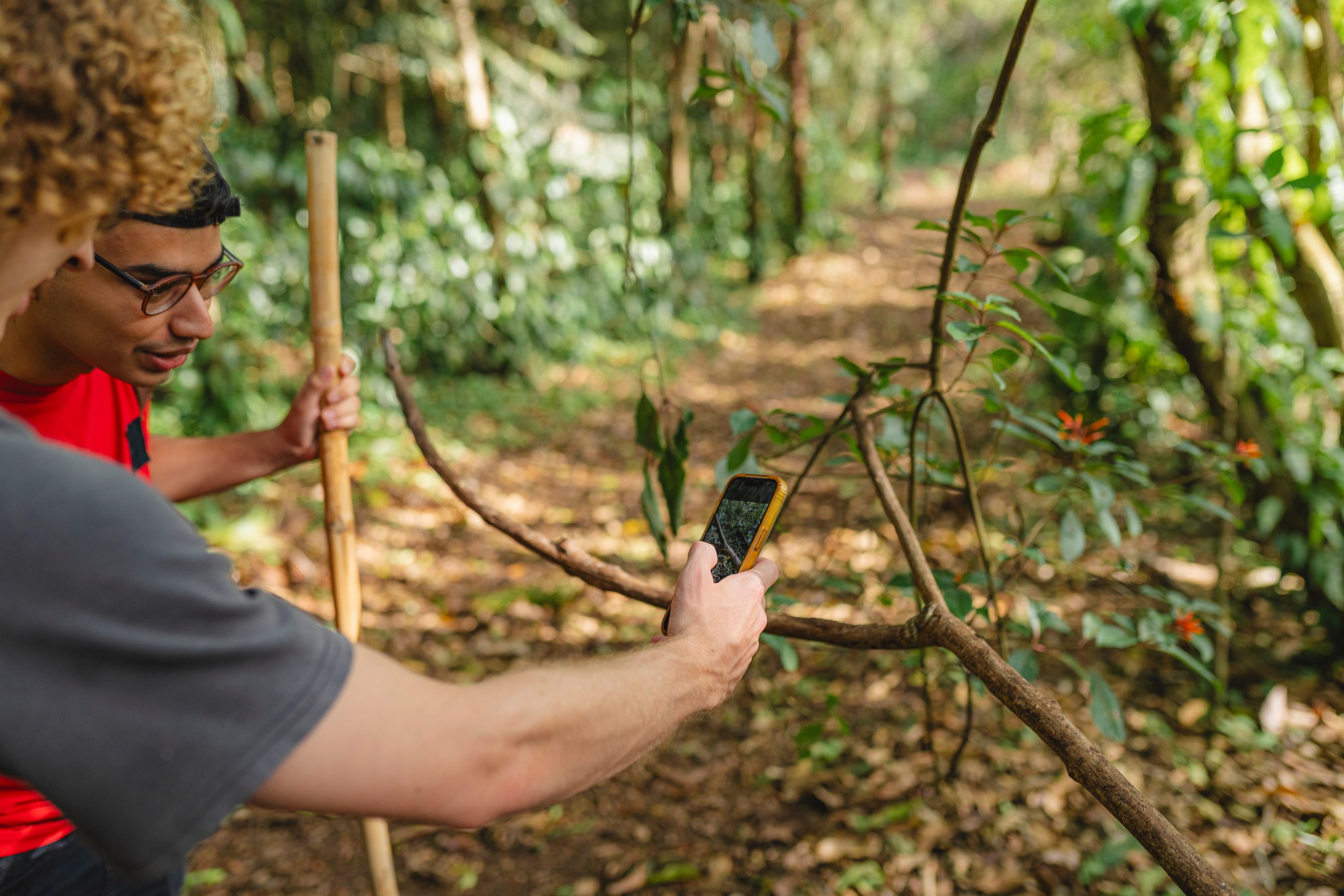
Main image: Image 2: STOCKEROcr, Adobe Stock #1368271106
Have a query?
Contact us
communications@unep-wcmc.org